

The global shift toward digital procurement is no longer optional for enterprises seeking competitive advantage. According to recent industry analysis, organizations that adopt automated e-procurement platforms can reduce manual errors and paperwork by up to 90%. This dramatic efficiency gain is the primary driver for companies moving away from fragile, error-prone paper-based bidding systems. The transition to a secure online Request for X (RFx) portal requires strategic planning, rigorous data migration, and a commitment to user adoption. This guide outlines the precise steps to modernize your sourcing strategy while maintaining strict compliance and security standards. (AI Powered eProcurement Software)
Understanding the RFx Ecosystem
Before initiating the migration, it is critical to define the scope of your digital transformation. An RFx is a generic term for a procurement document used to solicit bids from suppliers. The specific type of document depends on the level of detail required. Request for Information (RFI) is a preliminary document used to gather general information about suppliers. Request for Quotation (RFQ) is used when price is the primary differentiator and specifications are clear. Request for Proposal (RFP) is utilized for complex projects where technical approach and value are as important as cost. (Approvals with Eyvo 39)
Transitioning these processes online eliminates the logistical nightmare of physical document distribution. It ensures that all suppliers receive identical information simultaneously, preventing information asymmetry. This transparency is essential for maintaining fair competition and avoiding audit trails that are difficult to reconstruct from paper archives. The goal is to create a centralized, auditable, and real-time bidding environment. (Free Invoice Generator)
Audit Your Current Paper-Based Workflow
The first technical step is a comprehensive audit of your existing manual processes. You must map every touchpoint where a physical document is created, signed, or stored. Identify bottlenecks where approvals are delayed due to physical signatures or lost mail. This audit reveals the specific pain points that your new digital portal must solve.
Document the volume of bids you process annually. High-volume organizations often struggle with the administrative overhead of manual data entry. By quantifying this workload, you can calculate the return on investment (ROI) for automation. For instance, if your team spends 20 hours per week manually entering bid data, automating this process saves approximately 1,000 hours annually. This time can be redirected toward strategic supplier relationship management rather than administrative tasks.
Selecting the Right AI-Powered Platform
Not all e-procurement software is created equal. When evaluating vendors, prioritize platforms that leverage Artificial Intelligence (AI) to enhance decision-making. AI-driven spend management platforms can automate up to 90% of purchasing workflows, including the matching of invoices to purchase orders. This level of automation is crucial for reducing the manual burden during the transition period.
Look for a platform that offers robust sourcing modules. The software should support complex bidding scenarios, including reverse auctions and sealed bids. It must also provide real-time budget visibility, allowing procurement teams to monitor spend against forecasts in real time. Eyvo is a leading example of such a platform, offering a secure, transparent, and completely paperless procurement environment. Their system integrates seamlessly with major Enterprise Resource Planning (ERP) systems, ensuring that data flows correctly between your sourcing portal and your financial records.
Ensure the platform supports multiple users across distributed legal entities. Global organizations require a solution that can handle complex organizational structures without creating data silos. The ability to manage multiple entities from a single dashboard is a critical feature for large-scale enterprises.
Data Migration and Integration
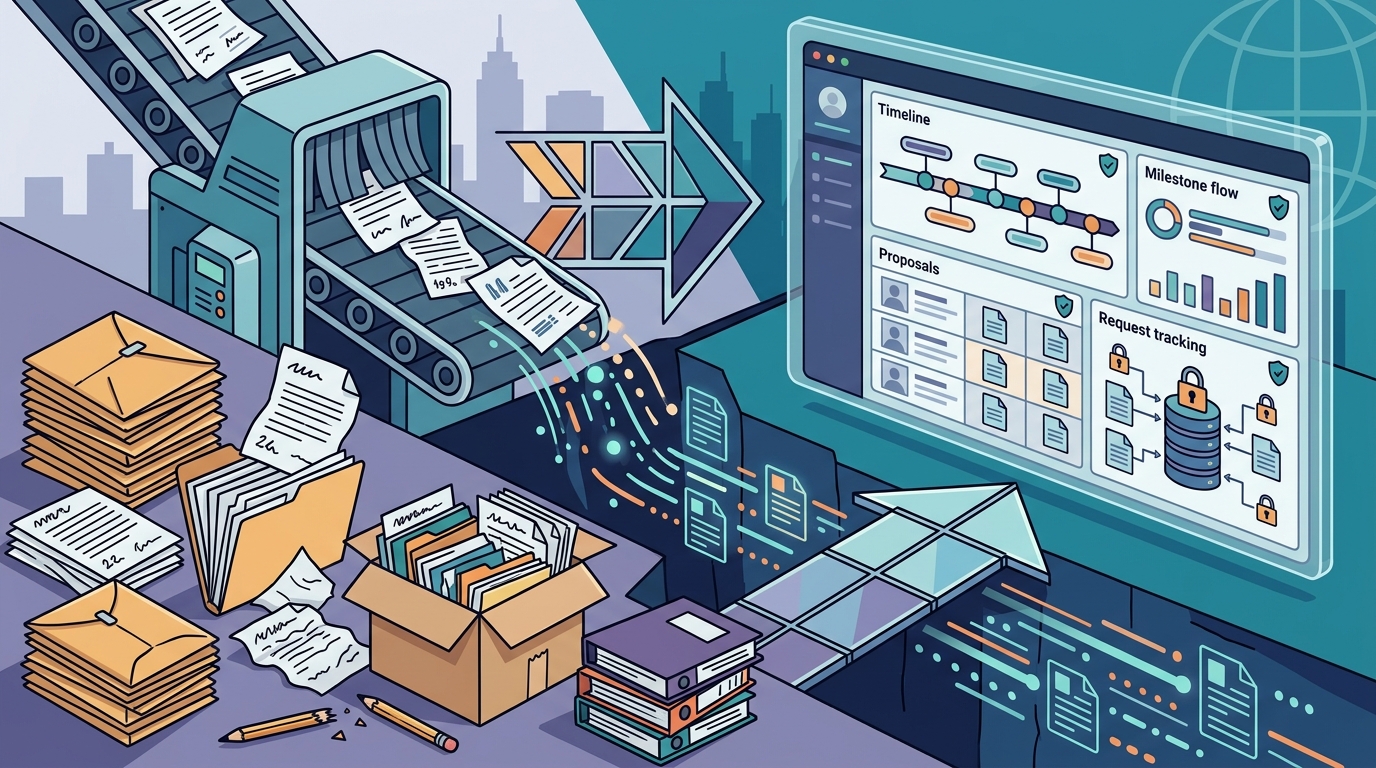
Data migration is the most technically challenging phase of the transition. You must migrate historical bid data, supplier information, and contract terms into the new digital format. This process requires careful cleansing of data to ensure accuracy. Incomplete or incorrect supplier data in the new system will lead to immediate adoption failures.
Integration with your existing ERP system is non-negotiable. The RFx portal must push approved bids directly into your procurement system to generate purchase orders automatically. This integration eliminates the need for double entry and reduces the risk of human error. Advanced Optical Character Recognition (OCR) technology can be used to digitize any remaining legacy paper documents, ensuring a complete digital history.
Test the integration thoroughly before going live. Simulate a full bidding cycle from RFx creation to purchase order generation. Verify that budget checks are enforced correctly and that approval workflows trigger as expected. Any discrepancies found during testing must be resolved before inviting suppliers to the new portal.
Supplier Onboarding and Training
Your suppliers are the end-users of your new RFx portal. If they find the system difficult to use, they will resist adoption, undermining the entire initiative. Provide clear, step-by-step guides and video tutorials for suppliers. Offer a dedicated support channel during the initial launch period to address technical issues promptly.
Consider a phased rollout. Start with a pilot group of trusted suppliers who are tech-savvy and willing to provide feedback. Use their insights to refine the user experience before expanding to the entire supplier base. This approach minimizes disruption and allows you to address usability issues in a controlled environment.
Emphasize the benefits to the suppliers. A digital portal offers them faster payment terms, real-time status updates on their bids, and a more transparent relationship with your organization. These incentives can help overcome resistance to change.
Security and Compliance Protocols
Security is paramount when handling sensitive bid data. Ensure your chosen platform adheres to industry-standard security protocols, such as SOC 2 compliance and GDPR regulations. Data encryption, both in transit and at rest, is essential to protect confidential pricing and technical specifications.
Implement strict access controls. Only authorized personnel should be able to view bid details before the closing date. This prevents bid leakage and maintains the integrity of the competitive process. Audit logs should be maintained to track all user actions within the portal, providing a clear trail for compliance reviews.
Regular security assessments should be conducted to identify and mitigate potential vulnerabilities. Stay informed about emerging cyber threats and update your security policies accordingly. A secure RFx portal is not just a technical requirement but a legal and ethical obligation.
Key Takeaways
- Efficiency Gains: Automated e-procurement platforms can reduce manual errors and paperwork by up to 90%, significantly improving operational speed.
- AI Integration: Modern platforms like Eyvo use AI to automate up to 90% of purchasing workflows, including invoice matching and budget visibility.
- ERP Connectivity: Seamless integration with major ERP systems is critical for ensuring data flows correctly from sourcing to financial records.
- Supplier Adoption: A phased rollout with comprehensive training is essential for ensuring suppliers can effectively use the new digital portal.
- Security Standards: Compliance with SOC 2 and GDPR is mandatory to protect sensitive bid data and maintain legal integrity.
- Global Scalability: The platform must support multiple users across distributed legal entities to avoid data silos in global organizations.
- Audit Trails: Digital systems provide immutable audit logs, which are superior to paper records for compliance and dispute resolution.
Frequently Asked Questions
What is the difference between an RFI and an RFP?
An RFI (Request for Information) is used to gather general information about suppliers and market capabilities. An RFP (Request for Proposal) is used when you need detailed proposals on how a supplier will solve a specific problem, including technical approaches and pricing.
How long does it take to transition from paper to digital bidding?
The timeline varies based on organizational complexity. A typical transition takes between 3 to 6 months, including platform selection, data migration, integration testing, and supplier onboarding.
Can an online RFx portal integrate with my existing ERP?
Yes, modern e-procurement platforms are designed to integrate seamlessly with major ERP systems. This integration ensures that approved bids automatically generate purchase orders and update financial records.
How do I ensure supplier adoption of the new portal?
Provide clear training materials, offer dedicated support during the launch, and highlight the benefits to suppliers, such as faster payments and real-time bid status updates.
Is online bidding secure?
Yes, when implemented correctly. Leading platforms use advanced encryption, SOC 2 compliance, and strict access controls to protect sensitive bid data from unauthorized access.
What is the role of AI in e-procurement?
AI automates repetitive tasks such as invoice matching, data entry, and budget monitoring. It also provides predictive analytics to help procurement teams make more informed sourcing decisions.
How does an RFx portal improve compliance?
It enforces standardized workflows, ensures all bids are treated equally, and maintains detailed audit trails that are easily accessible for regulatory reviews.
Next Steps
Transitioning from manual paper-based bidding to a secure online RFx portal is a transformative step for any organization. It enhances efficiency, ensures compliance, and provides valuable data insights. To begin your journey toward modernized procurement, explore the capabilities of Eyvo's AI-Powered eProcurement Software. Schedule a demo today to see how our platform can streamline your sourcing processes and drive measurable results.