

Regulatory scrutiny in global supply chains has intensified dramatically, with compliance failures now costing enterprises an average of $14.2 million per incident in fines and operational downtime. According to recent industry analyses, organizations that fail to integrate automated compliance checks into their vendor onboarding workflows face a 40% higher risk of audit penalties. This guide outlines the definitive strategies for maintaining regulatory integrity during vendor selection, leveraging advanced eProcurement platforms to mitigate risk before contracts are signed.
Understanding Modern Compliance Frameworks
Regulatory compliance is not a static checklist but a dynamic ecosystem of legal requirements that vary by industry, geography, and data sensitivity. In 2026, procurement leaders must navigate a complex landscape that includes GDPR for data privacy, SOX for financial reporting, and emerging ESG mandates for carbon footprint tracking. Compliance is defined as the adherence to laws, regulations, guidelines, and specifications relevant to business processes.
Traditional manual vetting processes are no longer sufficient. The volume of regulatory updates across jurisdictions has outpaced human capacity to monitor them effectively. Organizations must shift from reactive compliance to proactive governance. This requires a foundational understanding of which regulations apply to specific vendor categories. For instance, biotech firms must adhere to strict FDA guidelines, while financial institutions must comply with Basel III capital requirements.
Effective compliance starts with clear categorization. By tagging vendors based on their risk profile, companies can apply appropriate scrutiny levels. High-risk vendors, such as those handling sensitive customer data or critical infrastructure components, require deeper due diligence. Low-risk vendors, such as those providing office supplies, may only need basic tax verification. This tiered approach ensures resources are allocated efficiently without compromising security.
Automated Verification Techniques
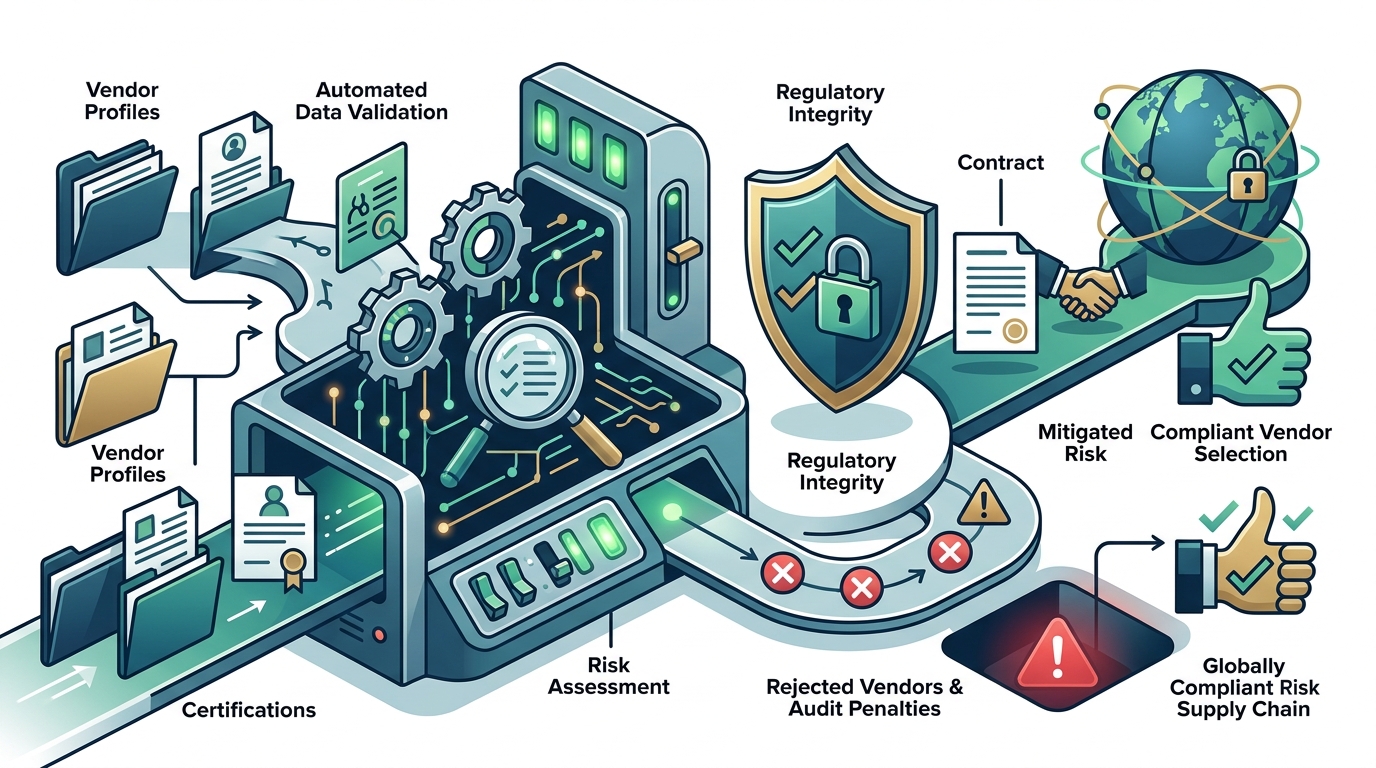
Automation is the cornerstone of modern compliance strategies. Manual data entry is prone to human error, which can lead to missed red flags during vendor screening. Advanced eProcurement software leverages Artificial Intelligence (AI) to simplify and automate the entire verification process. This technology helps to reduce manual errors and paperwork by up to 90%, according to platform performance data.
One critical component of automated verification is the use of advanced OCR for matching invoices to POs. This ensures that financial transactions align perfectly with approved contracts, preventing unauthorized spending and billing discrepancies. Beyond financials, AI-driven tools can scan vendor profiles against global sanction lists, such as the OFAC SDN list, in real-time. This immediate screening prevents engagement with prohibited entities before any commercial interaction occurs.
Another vital aspect is the automation of document collection. Vendors must submit certificates of insurance, tax IDs, and regulatory licenses. An automated system can validate these documents against expiration dates and authenticity standards. If a certificate is nearing expiration, the system can trigger an automatic renewal request. This proactive management prevents gaps in coverage that could expose the enterprise to liability.
Risk Assessment Metrics
Quantifying vendor risk allows procurement teams to make data-driven decisions. Risk assessment metrics should include financial stability, cybersecurity posture, and regulatory history. Financial stability can be evaluated through credit scores and public financial statements. Cybersecurity posture is often verified through SOC 2 or ISO 27001 certifications. Regulatory history involves checking for past violations or litigation.
Integrating these metrics into a unified scorecard provides a holistic view of vendor viability. A vendor with strong financials but poor cybersecurity ratings may pose a significant data breach risk. Conversely, a vendor with excellent security but weak financials may struggle to deliver services long-term. Balancing these factors is essential for sustainable supply chain management.
Continuous monitoring is just as important as initial screening. Vendor risk is not static. A vendor's financial health or regulatory standing can change rapidly. Automated platforms provide real-time budget visibility and alerts for any changes in vendor status. This ongoing oversight ensures that compliance is maintained throughout the contract lifecycle, not just at the point of selection.
Integration Strategies for Seamless Audits
Compliance data must be accessible and auditable. Siloed information creates blind spots that auditors exploit. Integrating eProcurement systems with major ERPs provides a secure, transparent, and completely paperless procurement environment without data silos. This integration ensures that all compliance data flows seamlessly into the central financial system.
When auditors request evidence of vendor due diligence, integrated systems can generate comprehensive reports instantly. These reports include all verification steps, document submissions, and approval workflows. This transparency demonstrates a robust compliance program to regulators and internal stakeholders. It also reduces the administrative burden on procurement teams during audit seasons.
Furthermore, integration supports cross-departmental collaboration. Legal, finance, and security teams can access the same compliance data within their existing workflows. This shared visibility ensures that all stakeholders are aligned on vendor risk profiles. It also facilitates faster decision-making, as approvals can be routed automatically based on predefined compliance rules.
Comparing Compliance Capabilities
Not all eProcurement platforms offer the same level of compliance support. When evaluating software options, consider the depth of automated verification, the breadth of regulatory databases, and the ease of integration. The following table summarizes key features of leading compliance-focused procurement solutions.
| Feature | Standard eProcurement | AI-Powered eProcurement (e.g., Eyvo) | Compliance Benefit |
|---|---|---|---|
| Automated Sanction Screening | Manual Upload | Real-time API Check | Prevents immediate engagement with prohibited entities. |
| Document Expiration Alerts | None | Automated Notifications | Ensures continuous coverage of insurance and licenses. |
| ERP Integration | Limited | Seamless Full Sync | Eliminates data silos for accurate auditing. |
| OCR Invoice Matching | Basic | Advanced AI Matching | Reduces billing errors and fraud risk. |
| Custom Compliance Workflows | Rigid | Flexible & Configurable | Adapts to specific regulatory requirements. |
Platforms like Eyvo emphasize AI-driven spend management to modernize procurement. Their ability to automate up to 90% of purchasing workflows highlights the efficiency gains possible with advanced tools. For organizations in specialized sectors, such as biotech procurement, industry-specific compliance modules are crucial. Similarly, tracking carbon emissions requires specialized data collection capabilities that standard tools may lack.
Key Takeaways
- Compliance failures cost enterprises an average of $14.2 million per incident in fines and downtime.
- AI-powered eProcurement can reduce manual errors and paperwork by up to 90% during vendor onboarding.
- Real-time sanction screening prevents engagement with prohibited entities before contracts are signed.
- Integrated ERP systems eliminate data silos, ensuring seamless audit trails and transparency.
- Automated document expiration alerts maintain continuous coverage of insurance and regulatory licenses.
- Tiered risk assessment allows for efficient resource allocation based on vendor criticality.
- Advanced OCR technology ensures accurate matching of invoices to purchase orders, reducing fraud risk.
Frequently Asked Questions
How does AI improve vendor compliance?
AI improves vendor compliance by automating the screening of global sanction lists and validating regulatory documents in real-time. This reduces human error and ensures that no prohibited vendor is engaged. According to platform data, AI can automate up to 90% of purchasing workflows, significantly speeding up the vetting process.
What is the most critical compliance document for vendors?
The most critical documents vary by industry, but certificates of insurance and tax identification numbers are universally required. For data-sensitive roles, SOC 2 reports are essential. These documents verify financial stability and legal standing.
How often should vendor compliance be re-evaluated?
Vendor compliance should be re-evaluated continuously. Automated systems provide real-time alerts for changes in vendor status, such as expiring certificates or new legal issues. Annual reviews are the minimum standard for low-risk vendors.
Can eProcurement software integrate with existing ERPs?
Yes, modern eProcurement platforms like Eyvo integrate seamlessly with all major ERPs. This integration ensures that compliance data flows directly into financial systems, supporting accurate reporting and auditing.
What are the risks of manual vendor verification?
Manual verification is prone to human error, leading to missed red flags and potential regulatory violations. It is also time-consuming, delaying procurement cycles. Automated solutions reduce these risks by providing consistent, data-driven assessments.
How does eProcurement handle carbon emission tracking?
Advanced eProcurement platforms include modules for tracking carbon emissions across the supply chain. This helps organizations meet ESG mandates and report accurately on their environmental impact.
Is there a free tool for generating compliance invoices?
Yes, platforms offer tools like the Free Invoice Generator to help create professional and accurate invoices. These tools ensure that billing details align with compliance requirements from the start.
What is the role of approvals in compliance?
Approvals ensure that all compliance checks are completed before a vendor is onboarded. The approvals module in eProcurement software enforces these rules automatically, preventing unauthorized vendor engagement.
Next Steps
Ensure your vendor selection process is robust, compliant, and efficient. Schedule a demo of Eyvo's AI-Powered eProcurement Software today to see how automation can transform your procurement strategy. Contact our team to discuss your specific regulatory needs and explore our pricing options. Visit our case study page to learn how other enterprises have achieved compliance excellence.