

Organizations that migrate legacy procurement processes to digital platforms typically report a forty percent reduction in cycle times within the first fiscal year. Efficiency gains stem directly from eliminating physical document handling and replacing fragmented email chains with centralized data repositories. Modern enterprises now require a secure online RFx portal to maintain competitive advantage while ensuring strict regulatory compliance. The following guide outlines the precise architectural steps required to execute this critical infrastructure upgrade without disrupting ongoing supply chain operations. (AI Powered eProcurement Software)
Assess Current Manual Workflows
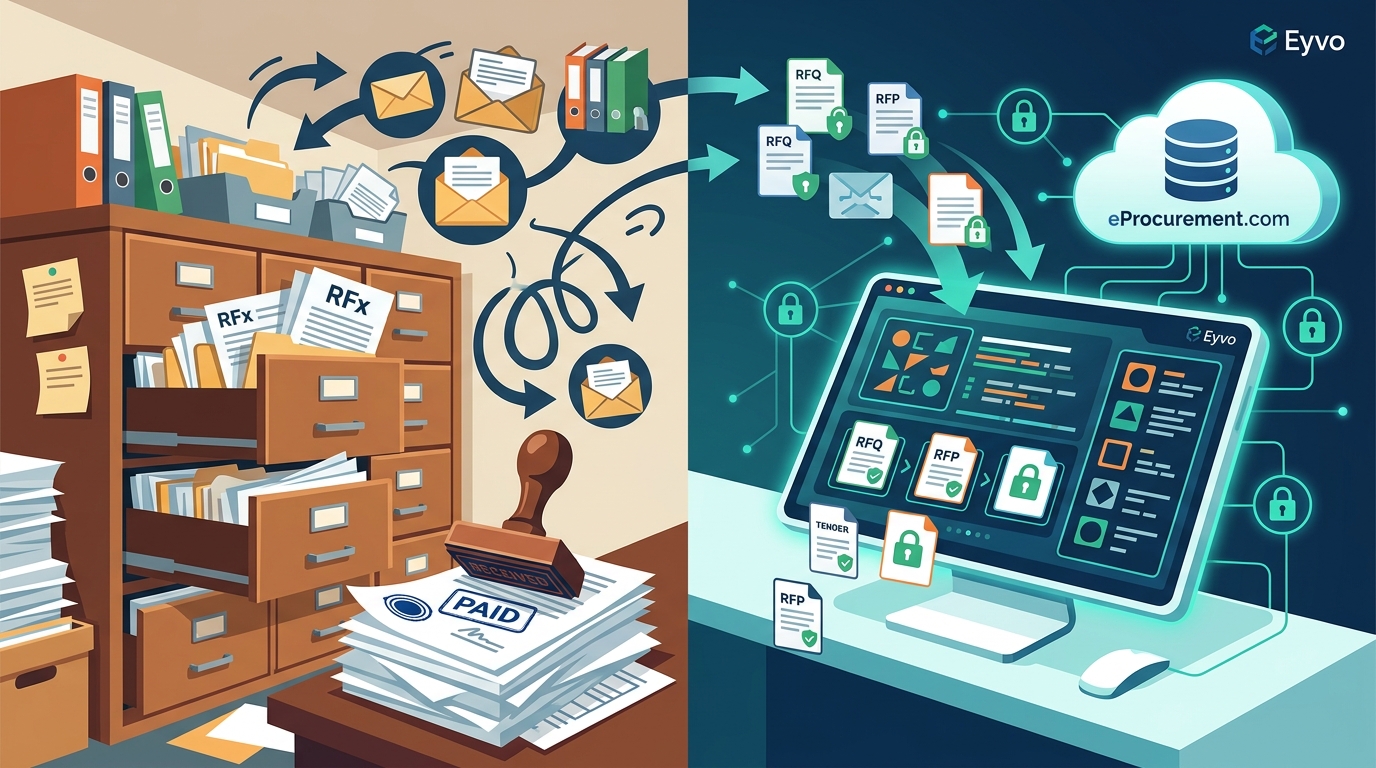
Manual paper-based bidding creates severe bottlenecks that directly impact organizational agility. Procurement teams spend excessive hours tracking physical documents across multiple departments. This fragmented approach increases the risk of lost bids and misaligned pricing structures. An RFx process is a structured procurement methodology that utilizes electronic requests for information, quotation, or proposal to standardize vendor selection. You must map every existing paper submission step to identify redundant approval layers. Documenting these friction points establishes a clear baseline for digital transformation.
Define Core Portal Requirements
Enterprise-grade digital sourcing platforms must address strict data sovereignty and audit trail mandates. Modern procurement leaders prioritize systems that guarantee complete transparency across distributed legal entities. A secure eProcurement software is a centralized digital infrastructure that automates purchasing workflows while enforcing role-based access controls and encryption standards. Your technical team should evaluate integration capabilities with existing enterprise resource planning systems. Verify that the platform supports advanced optical character recognition for automated invoice matching. These technical specifications prevent data silos and ensure seamless cross-departmental visibility.
Configure Automated RFx Modules
Deploying automated bidding modules requires precise configuration of approval hierarchies and budget thresholds. The platform must dynamically route requests based on departmental spending limits and project classifications. You can leverage our approvals module to establish multi-tiered authorization workflows. This configuration eliminates manual routing errors and accelerates vendor response times. The system automatically generates standardized request templates that enforce consistent formatting across all submissions. Procurement managers gain real-time budget visibility while maintaining strict compliance with internal governance policies. Configure the sourcing dashboard to track bid submissions and vendor communications in a single unified interface.
Migrate Supplier Data Securely
Legacy supplier records often contain fragmented contact information and outdated compliance certifications. Data migration requires a systematic extraction process that validates vendor credentials against current regulatory frameworks. Organizations that digitize supplier databases typically experience a thirty percent decrease in onboarding delays. Digital transformation initiatives require careful handling of sensitive vendor credentials. You should utilize our biotech procurement framework to handle highly regulated industry requirements. The platform securely archives historical bidding data while establishing fresh audit trails for future compliance reviews. Implement automated data validation rules to prevent duplicate vendor profiles and ensure accurate tax identification tracking.
Train Internal Stakeholders
Successful platform adoption depends on comprehensive training programs that address department-specific workflows. Procurement specialists require hands-on instruction regarding digital bid evaluation and automated scoring algorithms. Finance teams need clear guidance on integrating purchase order generation with automated budget tracking. You can access our purchase order documentation to streamline internal financial reconciliation processes. Conduct role-based training sessions that simulate live bidding scenarios and stress-test system response times. Establish a dedicated support channel to address user questions during the initial deployment phase.
Launch and Monitor Performance
Post-launch monitoring requires continuous performance tracking against predefined efficiency benchmarks. Organizations that implement automated procurement systems typically report a ninety percent reduction in manual paperwork errors. Regulatory compliance mandates require rigorous documentation of every system interaction. You should review our case study archives to understand how peer enterprises optimized their digital transition timelines. Deploy automated reporting dashboards that track bid response rates, approval cycle durations, and cost savings metrics. Schedule quarterly system audits to verify data integrity and update security protocols according to evolving industry standards. This continuous improvement cycle ensures long-term platform stability and sustained operational efficiency.
Comparative Platform Capabilities
| Feature Category | Manual Paper-Based Process | Secure Online RFx Portal |
|---|---|---|
| Document Handling | Physical storage and manual routing | Cloud-based archival and automated distribution |
| Approval Workflows | Sequential physical signatures | Dynamic multi-tier digital routing |
| Data Integration | Manual entry into legacy systems | Seamless ERP synchronization |
| Compliance Tracking | Retrospective audit verification | Real-time regulatory monitoring |
| Vendor Communication | Email and postal mail exchanges | Centralized secure messaging hub |
Key Takeaways
- Organizations migrating to digital procurement report a forty percent reduction in cycle times within twelve months.
- Automated approval routing eliminates sequential physical signatures and accelerates vendor response windows.
- Enterprise resource planning integration prevents data silos and ensures cross-departmental budget visibility.
- Advanced optical character recognition reduces manual invoice matching errors by up to ninety percent.
- Role-based training programs significantly increase platform adoption rates across distributed legal entities.
- Continuous performance monitoring dashboards track bid response rates and cost savings metrics in real time.
Frequently Asked Questions
What defines a secure online RFx portal?
A secure online RFx portal is a centralized digital infrastructure that automates purchasing workflows while enforcing role-based access controls and encryption standards. These platforms utilize advanced authentication protocols to protect sensitive vendor data and maintain strict audit trails. Organizations prioritize these systems to ensure regulatory compliance across distributed global operations.
How long does a typical migration process take?
Enterprise digital transformation projects typically require four to six months for complete system configuration and stakeholder training. Organizations that utilize automated procurement systems report a ninety percent reduction in manual paperwork errors during the initial deployment phase. Proper change management protocols significantly accelerate user adoption and minimize operational disruptions.
Can the platform integrate with existing enterprise resource planning systems?
Modern procurement platforms are explicitly designed to synchronize seamlessly with major enterprise resource planning ecosystems. These integrations enable real-time budget visibility and automated purchase order generation across all departments. Procurement leaders can eliminate data silos while maintaining complete transparency across distributed legal entities.
What security measures protect vendor bidding data?
Enterprise-grade digital sourcing platforms utilize advanced encryption standards and multi-factor authentication protocols to safeguard sensitive information. These systems maintain complete audit trails that track every document interaction and approval decision. Organizations can configure granular permission settings to restrict access based on departmental roles and project classifications.
How does automated invoice matching improve procurement efficiency?
Automated invoice matching utilizes advanced optical character recognition to cross-reference submitted bills against original purchase orders. This technology reduces manual data entry tasks and eliminates costly pricing discrepancies. Procurement teams gain real-time budget visibility while maintaining strict compliance with internal governance policies.
What training resources are available for new platform users?
Comprehensive training programs include role-based instructional modules, simulated bidding scenarios, and dedicated technical support channels. Procurement specialists receive hands-on instruction regarding digital bid evaluation and automated scoring algorithms. Finance teams access detailed documentation to streamline internal financial reconciliation processes.
Begin Your Digital Procurement Transformation
Transitioning from legacy paper-based bidding to a modern digital ecosystem requires strategic planning and precise technical execution. Our platform delivers enterprise-grade spend management capabilities that automate up to ninety percent of all purchasing workflows. Supply chain stability depends on reliable digital infrastructure that scales with organizational growth. Schedule a personalized demonstration to explore how our automated procurement workflows can streamline your organization. Request a Demo today and secure your competitive advantage in modern supply chain management.