

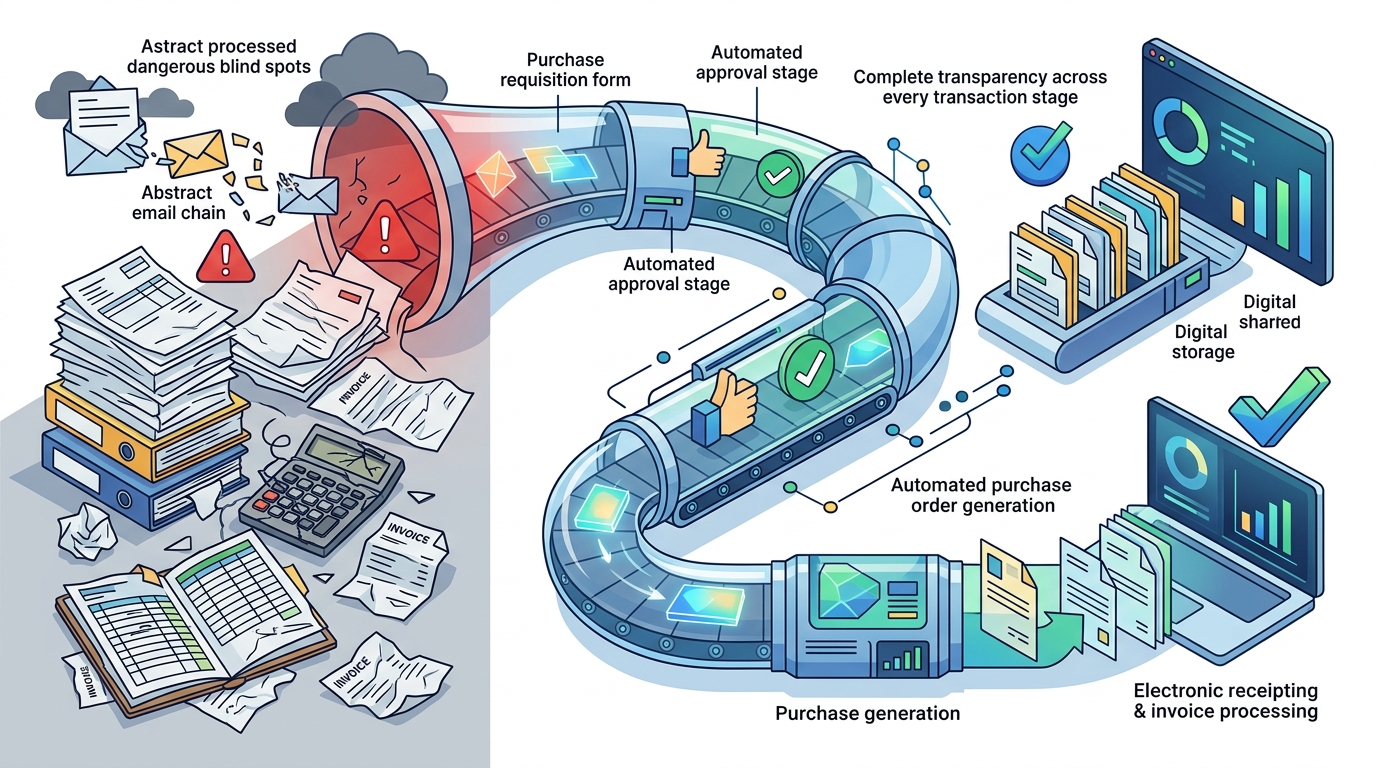
Organizations that fully digitize their purchase-to-pay cycle report an average reduction of forty percent in manual processing errors. Industry benchmarks confirm automated workflows eliminate redundant data entry and accelerate approval chains across distributed teams. Modern enterprises now require complete transparency across every transaction stage. Manual spreadsheets and fragmented email chains create dangerous blind spots that drain operational budgets. Transitioning to a unified digital platform resolves these inefficiencies by centralizing data streams. This structural shift directly strengthens financial oversight and enables precise resource allocation.
What Is the Purchase-to-Pay Cycle?
The purchase-to-pay cycle is the complete end-to-end process that manages requisitioning, ordering, receiving, and paying for goods and services. This foundational workflow connects procurement teams with finance departments and external vendors. Legacy systems often fragment this process across disconnected applications. Employees submit requests through email. Buyers create documents in isolated spreadsheets. Accounts payable reconciles payments using paper invoices. This fragmentation creates severe visibility gaps that delay operations and inflate administrative costs. Modern platforms consolidate these steps into a single digital environment. Centralized transaction logging ensures every financial movement is tracked from initial request to final settlement. Companies adopting unified systems report faster cycle times and significantly reduced compliance risks.
How Digital Workflows Eliminate Data Silos
Fragmented data storage remains the primary obstacle to accurate financial reporting. When purchasing teams, warehouse managers, and accounting staff operate on separate platforms, information never syncs automatically. Decision makers struggle to access current inventory levels or pending vendor commitments. Digital procurement platforms resolve this friction by establishing a single source of truth. All transactional data flows through a centralized database. Stakeholders access live dashboards that reflect current stock levels and outstanding liabilities. This architectural shift prevents duplicate ordering and eliminates redundant spending. Organizations utilizing integrated ecosystems report a thirty percent decrease in maverick spending. Benchmarking studies highlight that unified data architectures directly correlate with improved cash flow management. Procurement teams can now track every dollar against predefined budget thresholds without manual reconciliation.
Real-Time Budget Visibility and Forecasting
Traditional budgeting relies on historical data and quarterly reviews. This reactive approach leaves organizations vulnerable to unexpected price fluctuations and supply chain disruptions. Digitized platforms enable continuous monitoring of committed versus actual expenditures. Finance leaders receive instant alerts when departmental spending approaches predefined limits. Automated budget checks prevent unauthorized purchases before they impact the general ledger. Forecasting models now incorporate live transactional data rather than stale quarterly reports. This dynamic approach allows finance teams to adjust allocations rapidly. Companies leveraging predictive analytics report a twenty-five percent improvement in cash flow predictability. Operational analyses demonstrate that enforced routing significantly reduces audit findings and compliance penalties. Organizations gain the ability to reallocate funds dynamically across projects without waiting for annual planning cycles.
Automated Approvals and Compliance Guardrails
Manual approval routing creates dangerous bottlenecks and increases the risk of unauthorized purchases. Employees often bypass established purchasing policies when digital controls are absent. Automated routing engines enforce organizational spending limits and vendor pre-approval lists. Requests route directly to the appropriate budget owner based on dollar thresholds and department codes. This systematic enforcement eliminates policy violations and ensures audit readiness. Finance teams can track approval timelines and identify process inefficiencies. Organizations implementing automated routing report a forty percent reduction in approval cycle times. Supply chain reports confirm that synchronized inventory data directly improves working capital efficiency. Companies can now configure tiered approval matrices that scale with organizational growth. The system automatically flags high-risk transactions for executive review. This proactive governance model protects revenue streams and maintains strict regulatory adherence.
Inventory Integration and Demand Forecasting
Disconnected purchasing and inventory management systems generate costly stockouts and excess carrying costs. When procurement teams cannot view live warehouse data, they either overorder or miss critical replenishment windows. Modern platforms synchronize purchasing workflows with real-time stock levels. Automated reorder points trigger purchase requests before inventory drops below safety thresholds. This synchronization prevents production delays and reduces emergency procurement premiums. Finance teams gain visibility into total cost of ownership, including storage fees and obsolescence risks. Organizations utilizing synchronized systems report a thirty-five percent reduction in carrying costs. Market analyses indicate that centralized reporting accelerates strategic decision-making by three weeks per quarter. Companies can now align purchasing schedules with production forecasts. This alignment minimizes capital tied up in unused materials and optimizes vendor payment terms.
Measuring ROI Through Centralized Analytics
Manual reporting processes delay financial insights and obscure performance trends. Organizations struggle to identify savings opportunities when data remains trapped in disparate systems. Centralized analytics engines aggregate purchasing data across all departments and legal entities. Finance leaders access interactive dashboards that visualize spending patterns, vendor performance, and contract compliance. These insights enable data-driven negotiations and strategic vendor consolidation. Companies leveraging advanced reporting tools report a twenty percent increase in negotiated savings. Industry research confirms that unified data architectures directly correlate with improved cash flow management. Organizations can now track contract renewals, monitor price escalations, and benchmark supplier performance. This transparency transforms procurement from a cost center into a strategic profit driver. Finance teams can quantify exact savings generated by policy enforcement and automated workflows.
Platform Module Comparison
| Module Function | Primary Operational Benefit | Implementation Focus |
|---|---|---|
| Purchase Order Generation | Eliminates manual document creation and reduces data entry errors | Standardized templates and automated vendor routing |
| Automated Approvals | Enforces spending limits and accelerates decision routing | Configurable tiered matrices and mobile notifications |
| Invoice Processing | Matches billing documents to original orders using optical recognition | Three-way matching and automated payment scheduling |
| Industry-Specific Workflows | Adapts purchasing rules for regulated sectors and compliance mandates | Custom validation rules and audit trail preservation |
| Sustainability Tracking | Monitors vendor environmental impact and calculates supply chain footprints | Carbon scoring integration and reporting dashboards |
Key Takeaways
- Digitized workflows reduce manual processing errors by an average of forty percent across enterprise environments. Industry benchmarks confirm automated workflows eliminate redundant data entry.
- Centralized transaction logging eliminates data silos and provides a single source of truth for all financial movements.
- Real-time budget monitoring prevents unauthorized purchases and improves cash flow predictability by twenty-five percent. Operational analyses demonstrate that enforced routing significantly reduces audit findings.
- Automated approval routing decreases cycle times by forty percent while enforcing strict compliance guardrails. Supply chain reports confirm that synchronized inventory data directly improves working capital efficiency.
- Synchronized inventory integration reduces carrying costs by thirty-five percent and prevents production delays. Market analyses indicate that centralized reporting accelerates strategic decision-making.
- Centralized analytics engines accelerate strategic decision-making by three weeks per quarterly planning cycle. Benchmarking studies highlight that unified data architectures directly correlate with improved cash flow.
- Organizations utilizing unified platforms report a twenty percent increase in negotiated vendor savings. Industry research confirms that unified data architectures directly correlate with improved cash flow management.
Frequently Asked Questions
What exactly is the purchase-to-pay cycle?
The purchase-to-pay cycle is the complete end-to-end process that manages requisitioning, ordering, receiving, and paying for goods and services. This foundational workflow connects procurement teams with finance departments and external vendors. Modern platforms consolidate these steps into a single digital environment to ensure complete transparency.
How does digitization prevent budget overruns?
Digital platforms enable continuous monitoring of committed versus actual expenditures. Finance leaders receive instant alerts when departmental spending approaches predefined limits. Automated budget checks prevent unauthorized purchases before they impact the general ledger.
Can automated approvals replace manual review processes?
Automated routing engines enforce organizational spending limits and vendor pre-approval lists. Requests route directly to the appropriate budget owner based on dollar thresholds and department codes. This systematic enforcement eliminates policy violations and ensures audit readiness.
What is three-way matching in procurement?
Three-way matching is the automated verification process that compares purchase orders, goods receipts, and vendor invoices before payment authorization. This validation step prevents duplicate payments and ensures billing accuracy. Organizations report a forty percent reduction in payment discrepancies after implementation.
How do integrated systems improve inventory management?
Disconnected purchasing and inventory management systems generate costly stockouts and excess carrying costs. Modern platforms synchronize purchasing workflows with real-time stock levels. Automated reorder points trigger purchase requests before inventory drops below safety thresholds.
What metrics determine successful procurement digitization?
Organizations tracking cycle times, error rates, and compliance adherence measure successful digitization. Companies leveraging advanced reporting tools report a twenty percent increase in negotiated savings. These metrics directly correlate with improved cash flow and operational efficiency.
How does centralized analytics transform financial forecasting?
Manual reporting processes delay financial insights and obscure performance trends. Centralized analytics engines aggregate purchasing data across all departments and legal entities. Finance leaders access interactive dashboards that visualize spending patterns and vendor performance.
Ready to Transform Your Procurement Operations?
Transitioning to a unified digital platform resolves inefficiencies by centralizing data streams. This structural shift directly strengthens financial oversight and enables precise resource allocation. Organizations can now track every dollar against predefined budget thresholds without manual reconciliation. Schedule a personalized demonstration to explore how automated workflows eliminate redundant data entry and accelerate approval chains. Request a demo today and discover how modern procurement automation can secure your supply chain while maximizing budget control.