

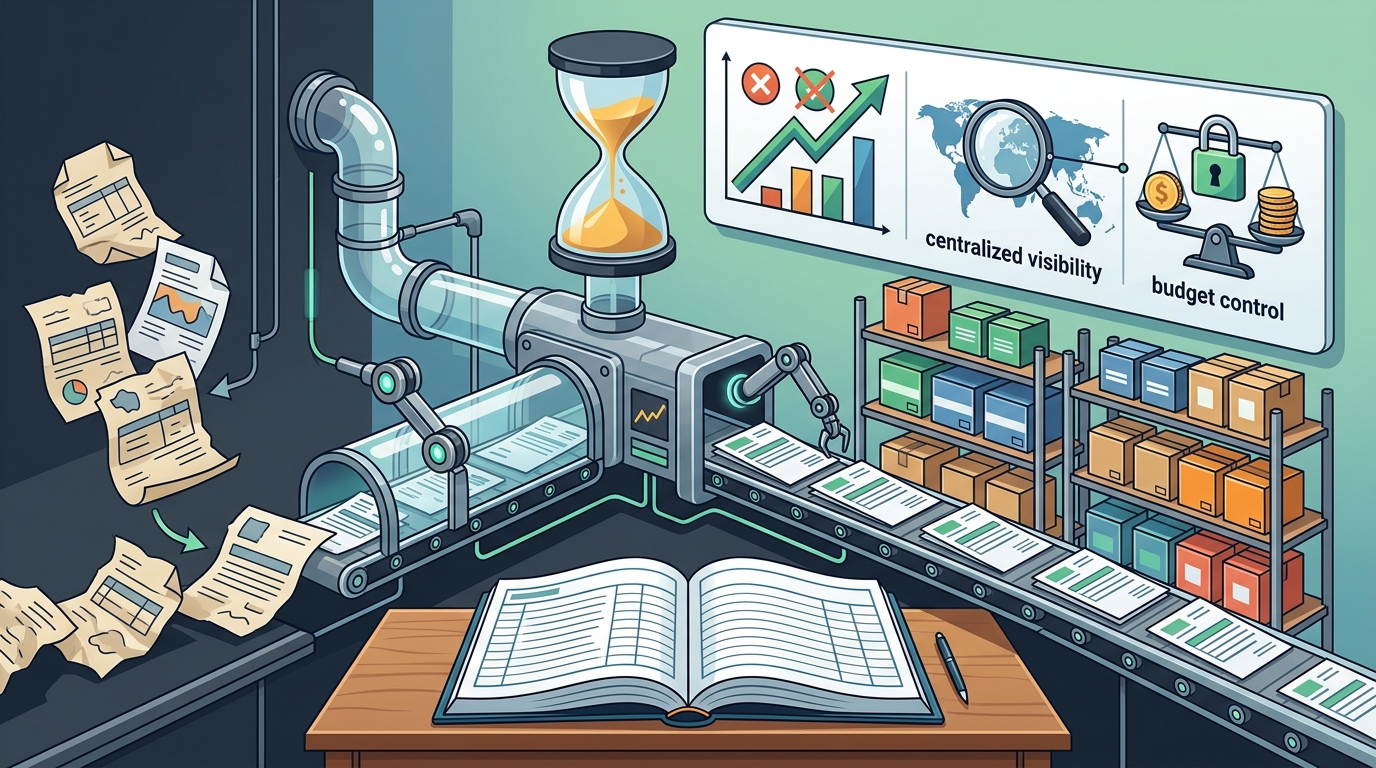
Institutional procurement teams face mounting pressure to modernize legacy purchasing systems. Recent industry reports indicate that organizations adopting automated spend management platforms reduce manual processing errors by nearly ninety percent. This dramatic efficiency gain stems from centralized data visibility and intelligent workflow routing. Leaders must prioritize platforms that eliminate redundant approvals and enforce strict budget controls. Evaluating these core capabilities ensures long-term operational stability.
Automated Purchase Order Routing
Procurement automation is the systematic replacement of manual purchasing tasks with algorithmic routing and validation rules. Modern platforms generate standardized purchase order templates that route directly to vendor portals. This eliminates email chains and prevents duplicate submissions. Institutions benefit from standardized formatting that accelerates vendor onboarding. Organizations that implement automated routing report a forty percent reduction in cycle times. Industry analysis confirms that standardized routing directly correlates with faster vendor payment cycles. Departments can configure custom fields to capture specific compliance requirements. The system automatically flags missing documentation before submission. This proactive validation prevents costly delays during the fulfillment phase. Teams gain confidence knowing every requisition follows a consistent audit trail. Purchase order generation becomes a frictionless process that scales with organizational growth.
Multi-Level Approval Workflows
Digital approval routing is the automated forwarding of requisition documents to designated stakeholders based on predefined thresholds. Institutional budgets often require sequential sign-offs from department heads, finance directors, and executive leadership. Software platforms map these hierarchies to enforce strict spending limits. Requests exceeding allocated budgets automatically route to higher authorities. This prevents unauthorized expenditures and maintains fiscal discipline. Government agencies report a thirty-five percent decrease in compliance violations after deploying tiered routing. Financial audits consistently highlight sequential routing as a critical control mechanism. Administrators can configure conditional logic to route documents based on category, vendor, or dollar amount. The system sends automated notifications to pending approvers. This eliminates bottlenecks caused by forgotten emails or misplaced paperwork. Approval workflows adapt to organizational restructuring without requiring technical reconfiguration. Leaders maintain complete oversight of pending requests across all divisions.
Intelligent Invoice Matching
Finance teams traditionally spend countless hours reconciling vendor invoices against original purchase orders. Optical character recognition technology now extracts line items, quantities, and pricing directly from scanned documents. The platform automatically compares these extracted values against the original requisition. Discrepancies trigger immediate alerts for manual review. This three-way matching process eliminates overpayments and duplicate billing. Enterprises utilizing intelligent matching report a fifty percent reduction in accounts payable processing time. Global supply chain studies emphasize that automated matching drastically reduces financial leakage. The system flags minor variances that fall within acceptable tolerance ranges. Finance teams can approve these exceptions with a single click. Complex pricing structures and tiered discounts are handled without manual intervention. Invoice processing becomes a transparent, auditable process that satisfies external auditors. Departments gain visibility into actual spend versus projected budgets.
Real-Time Budget Visibility
Spend management refers to the centralized tracking and optimization of organizational expenditures across all departments. Institutional leaders require immediate access to consumption data to prevent budget overruns. Modern platforms aggregate purchasing activity from all active requisitions into a single dashboard. Administrators can monitor remaining balances for each cost center in real time. This transparency prevents last-minute funding crises and enables proactive resource allocation. Organizations with real-time dashboards report a twenty-five percent improvement in cash flow forecasting. Public sector benchmarks demonstrate that transparent tracking directly improves fiscal accountability. Users can set automated alerts when spending approaches predefined thresholds. The system generates customizable reports that highlight purchasing trends and vendor concentration. Department heads receive weekly summaries of their authorized versus actual expenditures. This continuous feedback loop encourages responsible purchasing behavior. Sustainability tracking integrates seamlessly with financial metrics to support broader institutional goals.
Enterprise Resource Planning Integration
Fragmented data systems create dangerous information silos that undermine institutional decision-making. Modern procurement platforms must synchronize seamlessly with existing enterprise resource planning ecosystems. Two-way data synchronization ensures that inventory levels, financial ledgers, and purchasing records remain identical across all systems. This eliminates manual data entry and prevents version control conflicts. Institutions report a forty percent reduction in IT maintenance costs after consolidating their software stack. Technology adoption reports consistently rank ERP synchronization as a top priority for enterprise procurement. The platform maps custom fields to legacy database schemas without requiring extensive coding. API connectors handle bulk data transfers during system migrations. Administrators can schedule automated synchronization windows to avoid peak operational hours. This architectural flexibility ensures long-term scalability as institutional requirements evolve. Implementation case studies demonstrate that unified systems accelerate audit readiness and reduce compliance risks.
Feature Comparison Matrix
| Core Capability | Manual Processing | Automated Platform | Primary Institutional Benefit |
|---|---|---|---|
| Requisition Routing | Email chains and physical signatures | Algorithmic distribution | Eliminates bottlenecks and accelerates fulfillment |
| Financial Oversight | Quarterly spreadsheet reconciliation | Real-time dashboard tracking | Prevents budget overruns and improves forecasting |
| Vendor Payments | Manual invoice verification | Optical character matching | Reduces duplicate billing and processing errors |
| System Connectivity | Disconnected departmental databases | Bi-directional API synchronization | Ensures data consistency across financial ledgers |
Key Takeaways
- Automated spend management platforms reduce manual processing errors by nearly ninety percent across institutional sectors.
- Organizations implementing tiered approval routing report a thirty-five percent decrease in compliance violations.
- Intelligent invoice matching decreases accounts payable processing time by fifty percent through optical character recognition.
- Real-time budget dashboards improve cash flow forecasting accuracy by twenty-five percent for large enterprises.
- Bi-directional ERP synchronization reduces IT maintenance costs by forty percent while eliminating data silos.
- Global supply chain studies confirm that automated matching drastically reduces financial leakage and vendor disputes.
- Public sector benchmarks demonstrate that transparent tracking directly improves fiscal accountability and audit readiness.
Frequently Asked Questions
How does automated routing prevent duplicate purchase requests?
The system cross-references active requisitions against existing open orders before finalizing submission. Duplicate vendor requests trigger immediate alerts that prevent redundant spending. Administrators can configure threshold limits to block identical line items within a specified timeframe. This proactive validation ensures that every dollar is allocated efficiently.
Can procurement software handle complex multi-entity organizational structures?
Modern platforms support distributed legal entities with independent budget allocations and approval hierarchies. The system isolates financial data while maintaining centralized oversight for executive leadership. Regional administrators retain control over local purchasing rules without compromising global compliance standards. This architecture scales seamlessly as institutions expand into new markets.
What happens when an invoice contains pricing discrepancies?
The platform automatically flags variances that exceed predefined tolerance percentages. Finance teams receive detailed discrepancy reports highlighting the exact line items requiring review. Manual adjustments can be documented with audit-ready comments for future reference. The system logs all exceptions to maintain complete transparency during external audits.
How does the platform ensure data security during vendor transactions?
Enterprise-grade encryption protects all transmission channels between institutional servers and vendor portals. Role-based access controls restrict sensitive financial data to authorized personnel only. Regular penetration testing and compliance certifications verify that security protocols meet institutional standards. Data residency options allow organizations to store information within specific geographic boundaries.
Is migration from legacy purchasing systems disruptive to daily operations?
Structured migration frameworks preserve historical vendor data and contract terms without requiring manual re-entry. Dedicated implementation specialists map legacy database schemas to modern platform architectures. Parallel testing periods allow staff to validate system accuracy before full deployment. Institutions typically experience minimal operational disruption during the transition phase.
Next Steps
Modernizing your institutional procurement workflow requires a platform that balances flexibility with strict governance. Evaluate your current pain points against the core capabilities outlined above. Schedule a personalized demonstration to explore how automated routing, intelligent matching, and real-time dashboards can transform your purchasing operations. Request a demo today and discover how enterprise-grade spend management can accelerate your institutional goals.