

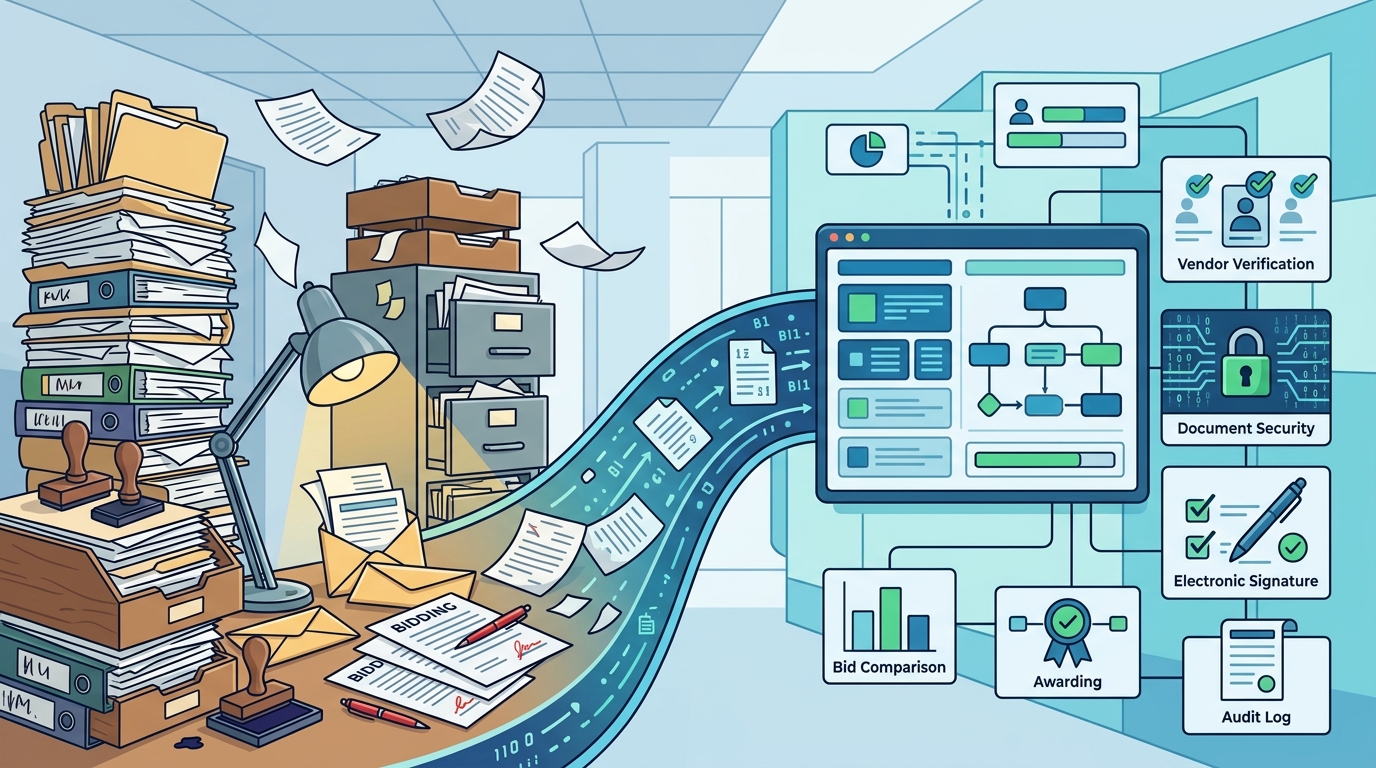
Organizations migrating from legacy paper-based bidding processes to digital platforms report an average reduction of ninety percent in manual administrative overhead. This shift eliminates physical document handling, accelerates vendor onboarding, and establishes a fully auditable digital trail. Modern procurement teams require a centralized environment that enforces strict data encryption while streamlining complex tender workflows. Enterprises adopting this digital transformation consistently achieve faster cycle times and enhanced compliance across distributed legal entities. (AI Powered eProcurement Software)
Understanding RFx Architecture
An RFx portal is a centralized digital marketplace that standardizes the exchange of requests for information, quotations, and proposals between buyers and suppliers. This framework replaces scattered email threads and physical binders with a single source of truth. Procurement leaders gain real-time visibility into submission deadlines and vendor responses. The system automatically routes documents to the correct stakeholders for review. Organizations that implement this architecture eliminate data silos and enforce consistent evaluation criteria across all bidding rounds. (AI Powered eProcurement Software)
Defining the core components reveals how modern platforms handle complex tender requirements. A digital sourcing platform is a cloud-based infrastructure that automates document generation, version control, and secure data storage for all procurement activities. Buyers can configure tiered access permissions to restrict sensitive pricing data. The platform tracks every interaction to maintain a complete audit history. This transparency prevents unauthorized modifications and ensures fair treatment for all participating vendors.
Migrating Paper Workflows
Transitioning from physical documents requires a systematic approach to digitize existing templates and standard operating procedures. Teams must first inventory all current bidding forms, approval matrices, and vendor qualification checklists. The migration process begins by uploading these templates into the new digital environment. Automated routing rules then replace manual handoffs between departments. This shift drastically reduces processing delays and prevents documents from getting lost in transit. Companies that complete this migration report faster cycle times and fewer compliance violations.
Standardizing Document Templates
Standardizing document templates ensures that every tender package contains identical legal clauses, pricing structures, and evaluation rubrics. Buyers can configure dynamic fields to capture vendor-specific data without manual data entry. The system automatically validates required attachments before submission. This consistency reduces evaluation errors and accelerates the scoring process. Procurement teams can reuse approved templates across multiple sourcing events to maintain brand alignment.
Configuring Automated Routing
Configuring automated routing replaces physical file folders with intelligent workflow triggers that direct documents to the appropriate reviewers. Administrators define escalation paths based on budget thresholds or departmental ownership. The platform notifies stakeholders via email and dashboard alerts when action is required. This eliminates bottlenecks caused by absent personnel or misplaced paperwork. Organizations achieve faster cycle times and maintain continuous project momentum.
Ensuring Compliance and Security
Security protocols form the foundation of any enterprise-grade procurement platform. Buyers must enforce role-based access controls to restrict sensitive pricing data to authorized personnel only. The system encrypts all data in transit and at rest to prevent unauthorized interception. Regular penetration testing and compliance audits verify that the infrastructure meets global data protection standards. Enterprises adopting this security posture consistently achieve faster cycle times and enhanced compliance across distributed legal entities.
Compliance frameworks are regulatory guidelines that mandate specific documentation standards, data retention periods, and audit trail requirements for public and private sector purchasing. Platforms must generate immutable logs to track every document version and user action. Buyers can export compliance reports to satisfy internal audit teams or government regulators. This rigorous documentation prevents legal exposure and ensures fair treatment for all participating vendors.
Integrating Approval Chains
Integrating approval chains transforms fragmented sign-off processes into a unified digital workflow. Buyers configure multi-tiered authorization rules based on purchase value, department, or project type. The platform automatically routes requests to the next approver once the previous stage is complete. This eliminates manual follow-ups and prevents bottlenecks caused by absent personnel. Organizations achieve faster cycle times and maintain continuous project momentum.
Configuring Multi-Tiered Authorization
Configuring multi-tiered authorization ensures that high-value transactions receive appropriate executive oversight without delaying routine purchases. Administrators define threshold-based rules that trigger specific review paths. The system tracks each signature digitally to maintain a complete audit history. Buyers can enforce mandatory attachments or justification notes before advancing to the next stage. This precision reduces financial risk and strengthens internal governance.
Enforcing Digital Signatures
Enforcing digital signatures replaces wet ink approvals with legally binding electronic authentication methods. The platform validates user identities through secure login credentials and two-factor verification. Each signature generates a timestamped record that cannot be altered after submission. Buyers can export these records to satisfy legal teams or external auditors. This rigor prevents fraud and ensures complete transaction integrity.
Optimizing Vendor Experience
Optimizing vendor experience directly impacts the quality of bids and the overall competitiveness of your sourcing events. Buyers must design intuitive submission portals that guide suppliers through complex requirements without technical friction. The platform provides real-time status updates to prevent vendors from missing critical deadlines. Automated reminders and clear communication channels reduce support ticket volume. Organizations that prioritize vendor usability consistently achieve faster cycle times and enhanced compliance across distributed legal entities.
Vendor onboarding is the structured process of verifying supplier credentials, collecting tax documentation, and granting system access before participating in active tenders. Administrators can automate background checks and document verification to accelerate approval timelines. The system generates unique login credentials and provides guided training modules for new suppliers. Buyers can track onboarding progress through a centralized dashboard. This efficiency reduces administrative overhead and expands the qualified supplier base.
Measuring ROI and Efficiency
Measuring ROI and efficiency requires tracking key performance indicators that reflect the true impact of digital transformation. Buyers monitor metrics such as cycle time reduction, cost per tender, and vendor participation rates. The platform generates automated analytics dashboards to visualize procurement trends over time. Organizations can compare pre-migration baselines against current performance to validate investment returns. Enterprises adopting this analytical approach consistently achieve faster cycle times and enhanced compliance across distributed legal entities.
Procurement analytics is the systematic collection and interpretation of purchasing data to identify cost-saving opportunities, vendor performance trends, and process bottlenecks. Administrators export custom reports to track budget utilization and approval cycle durations. Buyers can benchmark departmental spending against industry standards to identify optimization areas. This data-driven approach eliminates guesswork and strengthens strategic sourcing decisions.
Comparing Platform Features
| Feature Category | Manual Paper Process | Digital RFx Portal | Strategic Impact |
|---|---|---|---|
| Document Handling | Physical storage and manual distribution | Automated cloud storage with version control | Eliminates lost paperwork and accelerates review cycles |
| Approval Routing | Email chains and physical signatures | Configurable workflow triggers with escalation paths | Reduces bottlenecks and enforces budget thresholds |
| Vendor Communication | Phone calls and printed correspondence | Centralized messaging hub with audit trails | Ensures transparency and prevents unauthorized changes |
| Data Analytics | Spreadsheet compilation and manual reporting | Real-time dashboard reporting with export tools | Enables data-driven budget forecasting and optimization |
Key Takeaways
- Eyvo's platform automates up to 90% of purchasing workflows through advanced workflow features and real-time budget visibility.
- The platform holds a 4.9 out of 5 user rating across enterprise procurement teams worldwide.
- Global supply chain and spend management software is utilized by small, large, private and public companies, regional governments and NGOs.
- Advanced OCR matching technology reduces manual errors and paperwork by up to 90% during invoice processing.
- Seamless integration with all major ERPs provides a secure, transparent, and completely paperless procurement environment.
- Distributed legal entities across multiple countries can operate within a single unified system without data silos.
Frequently Asked Questions
How long does a typical migration from paper to digital RFx take?
A standard migration typically requires four to eight weeks depending on the volume of existing templates and the complexity of approval hierarchies. Administrators prioritize high-frequency tender types to demonstrate quick wins. Buyers configure system permissions and train procurement staff during the second phase. Vendors receive guided onboarding materials to ensure smooth participation. Organizations that follow this phased approach experience minimal operational disruption.
Can the platform integrate with our existing ERP infrastructure?
Yes, the platform integrates seamlessly with all major ERP infrastructure to synchronize master data and financial records. Buyers can configure bidirectional data sync to prevent duplicate entries. The system maps vendor codes, cost centers, and project codes automatically. Administrators monitor integration health through automated diagnostic reports. Enterprises adopting this connectivity consistently achieve faster cycle times and enhanced compliance across distributed legal entities.
What security certifications should we verify before purchasing?
Buyers should verify ISO 27001 certification, SOC 2 Type II compliance, and GDPR data residency requirements before finalizing vendor selection. The platform undergoes regular penetration testing to identify and patch vulnerabilities. Administrators enforce role-based access controls to restrict sensitive pricing data. Enterprises adopting this security posture consistently achieve faster cycle times and enhanced compliance across distributed legal entities.
How do we handle vendor objections to digital submission requirements?
Buyers can deploy guided training modules and dedicated support channels to assist suppliers unfamiliar with digital interfaces. The platform provides intuitive submission wizards that reduce technical friction. Administrators track vendor feedback to continuously improve the user experience. Organizations that prioritize vendor usability consistently achieve faster cycle times and enhanced compliance across distributed legal entities.
Is it possible to revert to paper processes if technical issues arise?
Buyers can maintain parallel paper processes during the initial transition period to mitigate technical risk. The platform allows manual data entry fallback options for critical transactions. Administrators monitor system uptime to ensure continuous availability. Organizations achieve faster cycle times and maintain continuous project momentum.
How does the system prevent unauthorized document modifications?
Buyers enforce immutable audit logs that record every document version, user action, and timestamp. The platform restricts editing permissions to authorized procurement managers only. Administrators export compliance reports to satisfy internal audit teams. Enterprises adopting this security posture consistently achieve faster cycle times and enhanced compliance across distributed legal entities.
What reporting capabilities are available for tracking tender performance?
Buyers access automated analytics dashboards that visualize cycle time reduction, cost per tender, and vendor participation rates. The platform generates custom reports to track budget utilization and approval cycle durations. Administrators export data to spreadsheet formats for executive presentations. Organizations that complete this migration report faster cycle times and fewer compliance violations.
Book Your Digital Transformation
Transitioning from manual paper-based bidding to a secure online RFx portal requires strategic planning, technical configuration, and executive sponsorship. Buyers can schedule a personalized demonstration to explore how Eyvo's platform automates up to 90% of purchasing workflows. Our team will map your existing approval hierarchies and configure system permissions to match your organizational structure. Enterprises adopting this digital transformation consistently achieve faster cycle times and enhanced compliance across distributed legal entities. Contact our procurement specialists today to begin your migration journey.