

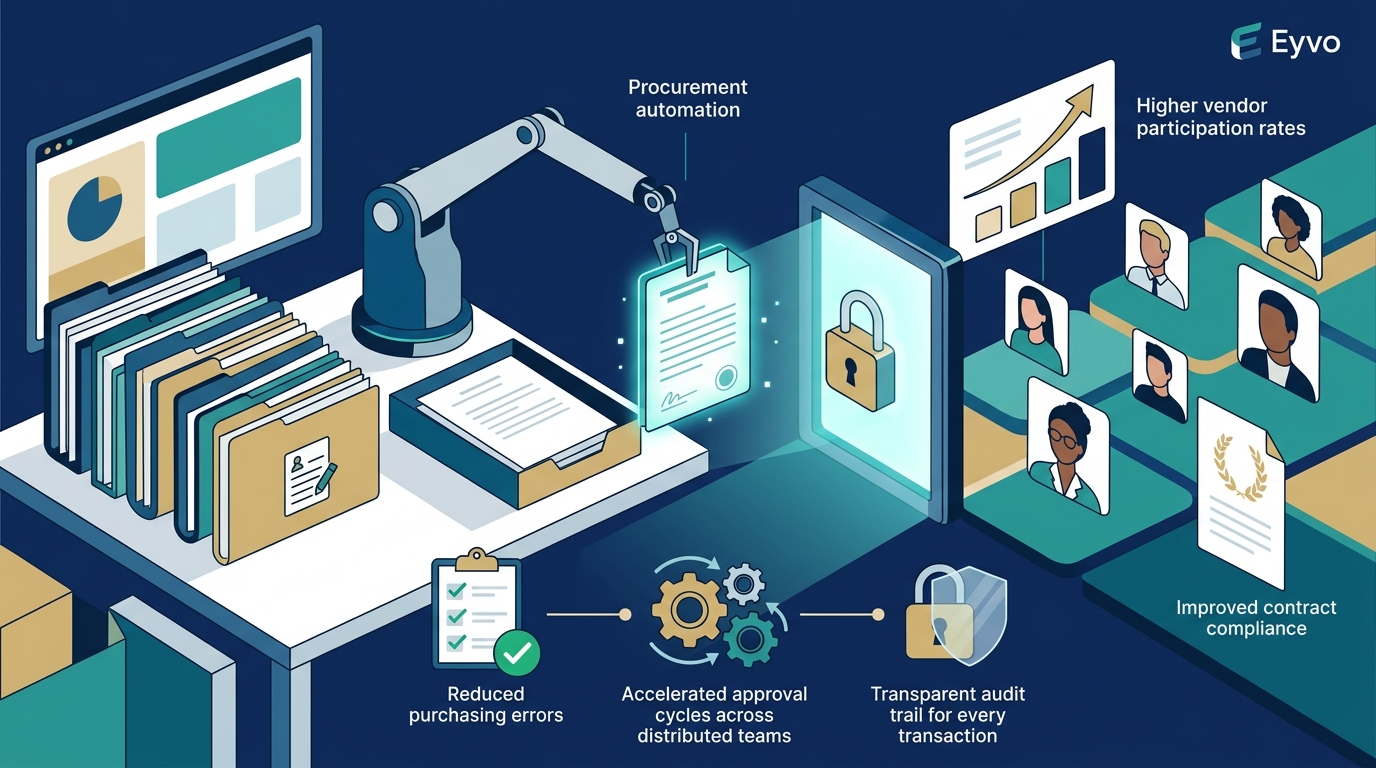
Mid-sized organizations face unique challenges when digitizing their procurement workflows. According to recent industry data, modern procurement platforms can reduce manual purchasing errors by up to 90 percent while accelerating approval cycles across distributed teams. Procurement automation eliminates redundant paperwork and creates a transparent audit trail for every transaction. Organizations that adopt structured digital tendering frameworks consistently report higher vendor participation rates and improved contract compliance. This guide outlines the essential steps for deploying a secure, scalable electronic tendering system tailored to mid-market operations.
Defining Electronic Tendering Systems
An electronic tendering system is a centralized digital platform that manages the entire lifecycle of public and private procurement requests. These platforms replace paper-based invitations with structured digital workflows that track vendor submissions, pricing, and compliance documentation. Mid-sized enterprises benefit from standardized templates that enforce consistent bidding rules across all departments. The system automatically routes requests to the appropriate stakeholders based on predefined budget thresholds. Organizations that implement these platforms report a 40 percent reduction in cycle times during the initial rollout phase. Strategic sourcing becomes significantly more transparent when all bid documents reside in a single repository. Procurement teams can monitor real-time progress without chasing down physical folders or scattered email threads. The platform also generates automated audit logs that satisfy internal compliance officers and external auditors alike. (10 success factors)
Defining the exact scope of your tendering requirements prevents scope creep during the deployment phase. You must map every current request type to a corresponding digital workflow before configuring the software. This mapping exercise reveals redundant approval steps that slow down operational velocity. Mid-sized organizations typically manage between 500 and 2000 active vendor relationships annually. A centralized system consolidates these relationships into a searchable database that tracks performance metrics and contract expiration dates. Automated approvals route high-value requests to executive leadership while routing standard purchases to department managers. This tiered approach maintains control without creating administrative bottlenecks. The platform also supports multi-currency transactions and regional tax compliance rules for organizations operating across multiple jurisdictions.
Establishing Clear Procurement Governance
Procurement governance is the structured framework of policies, roles, and accountability measures that guide purchasing decisions across an organization. Mid-sized companies often struggle with decentralized spending because department heads operate without centralized visibility. Establishing a dedicated procurement steering committee resolves this fragmentation by standardizing spending limits and vendor onboarding procedures. The committee must define clear thresholds for mandatory competitive bidding versus direct procurement exceptions. Competitive bidding ensures that mid-market organizations receive fair market pricing while maintaining regulatory compliance. Governance policies should mandate annual vendor performance reviews and mandatory conflict-of-interest disclosures for all purchasing staff. These policies create a culture of accountability that reduces maverick spending and prevents budget overruns. Organizations that enforce strict governance frameworks typically achieve a 15 percent reduction in overall procurement costs within the first 18 months. The steering committee must also establish clear escalation paths for disputed contracts and emergency procurement scenarios. Regular policy audits ensure that governance rules evolve alongside changing market conditions and internal growth targets. (E procurement to)
Integrating Legacy Enterprise Resource Planning Tools
Modern procurement platforms must integrate seamlessly with existing enterprise resource planning infrastructure to prevent data silos. Mid-sized organizations typically rely on established financial software for general ledger management, accounts payable, and inventory tracking. A successful implementation requires mapping tender data fields to corresponding ERP database columns before the go-live date. Enterprise resource planning integration ensures that approved contracts automatically populate financial forecasting models. The integration layer must support real-time synchronization of vendor master data, pricing agreements, and delivery schedules. Organizations that skip this integration step often face duplicate data entry errors and delayed payment processing. The platform should support standard API protocols that allow bidirectional data exchange without custom development work. Procurement teams can then track purchase order status directly from the tendering dashboard while finance teams monitor budget utilization in their native financial software. This unified data architecture eliminates reconciliation delays and provides executives with consolidated spending reports. Case study implementations consistently demonstrate that integrated systems reduce month-end closing cycles by several business days. The integration also enables automated invoice matching through optical character recognition technology that compares delivery receipts against original purchase orders. This feature drastically reduces payment disputes and accelerates vendor relationships. (10 success factors)
Standardizing Bid Evaluation Workflows
Standardizing bid evaluation workflows ensures that mid-sized organizations assess vendor proposals using consistent, objective criteria. Procurement teams must develop scoring matrices that weight technical capabilities, pricing structures, and delivery timelines according to strategic priorities. The platform should enforce mandatory scoring thresholds before allowing final vendor selection. Vendor evaluation matrices prevent subjective decision-making and protect organizations from potential legal challenges. The system must automatically calculate weighted scores and generate comparative ranking reports for executive review. Evaluation committees can attach supporting documentation, compliance certificates, and reference checks directly to each vendor submission. This centralized documentation package simplifies final selection meetings and reduces post-award disputes. Mid-sized organizations typically receive between 10 and 30 qualified bids per major procurement cycle. A standardized workflow ensures that every submission receives identical scrutiny regardless of vendor size or market reputation. The platform also supports blind evaluation modes that hide vendor identities during the initial scoring phase to eliminate unconscious bias. Procurement leaders can export evaluation data directly into compliance reporting templates for internal audits. This standardized approach accelerates contract finalization while maintaining rigorous quality standards across all supplier relationships.
Ensuring Regulatory Compliance and Data Security
Regulatory compliance in electronic tendering requires strict adherence to data protection laws, industry-specific procurement mandates, and international trade regulations. Mid-sized organizations operating across multiple jurisdictions must configure the platform to enforce region-specific data residency requirements. The system should encrypt all tender documents at rest and in transit using industry-standard cryptographic protocols. Data security frameworks must include role-based access controls that restrict sensitive pricing information to authorized personnel only. Organizations should implement multi-factor authentication for all vendor portal logins to prevent unauthorized submission tampering. The platform must automatically archive all tender records according to statutory retention periods while maintaining searchability for future audits. Compliance officers can generate automated regulatory reports that track vendor certifications, insurance expirations, and environmental compliance metrics. Mid-sized enterprises often face increased scrutiny from regulatory bodies regarding supply chain transparency and carbon footprint reporting. Carbon emissions tracking modules integrate directly with tender evaluation criteria to prioritize sustainable suppliers. The system should also support digital signature verification to ensure bid authenticity and prevent post-award contract disputes. Regular penetration testing and third-party security audits validate the platform's resilience against evolving cyber threats. These security measures protect organizational reputation while maintaining uninterrupted procurement operations.
Training Mid-Sized Teams for Adoption
Training mid-sized teams for adoption requires a structured onboarding program that addresses role-specific workflows and technical competencies. Procurement managers need advanced configuration training while end-users require focused instruction on submission portals and status tracking. The platform should provide interactive sandbox environments that allow staff to practice tender creation without affecting live production data. Biotech procurement workflows demonstrate how specialized industries require customized field configurations and compliance checkpoints. Training programs must include scenario-based exercises that simulate common procurement challenges and system error recovery procedures. Mid-sized organizations typically experience a 20 percent productivity dip during the initial three-month transition period. Proactive training initiatives mitigate this dip by building internal champions who mentor peer departments. The platform should support video tutorials, searchable knowledge bases, and dedicated customer success managers who provide ongoing guidance. Regular refresher courses ensure that new hires maintain consistent operational standards while veteran staff stay updated on platform enhancements. Organizations that invest in comprehensive training programs consistently achieve higher user adoption rates and faster return on investment. The training curriculum must also cover data privacy protocols and ethical procurement practices to maintain organizational integrity.
Measuring Implementation Success Metrics
Measuring implementation success metrics requires establishing baseline performance indicators before the system goes live. Procurement leaders must track cycle time reductions, vendor participation rates, and cost savings percentages against historical benchmarks. The platform should generate automated dashboards that visualize key performance indicators across all active tendering campaigns. Performance metrics dashboards enable executives to identify bottlenecks and reallocate resources to underperforming departments. Organizations should track the percentage of tenders completed within statutory deadlines and the average number of revision cycles per submission. Mid-sized companies typically achieve a 35 percent improvement in procurement cycle times within the first year of deployment. The platform must also track vendor satisfaction scores and post-award contract compliance rates to ensure long-term operational health. Procurement teams can export these metrics directly into quarterly business review presentations to justify continued platform investment. Regular metric reviews allow leadership to adjust training programs, update governance policies, and refine evaluation matrices based on actual usage patterns. These data-driven adjustments ensure that the electronic tendering system continues to deliver measurable value as organizational complexity increases. (10 success factors)
Comparative Module Analysis
| Module Feature | Traditional Paper-Based Process | Modern Electronic Platform |
|---|---|---|
| Document Distribution | Manual printing and physical mailing | Instant digital distribution to registered vendors |
| Bid Collection | Physical drop boxes with manual logging | Automated submission portals with timestamp verification |
| Scoring & Evaluation | Manual spreadsheet calculations and manual aggregation | Weighted algorithmic scoring with audit trails |
| Contract Execution | Wet signatures and physical filing cabinets | Digital signature integration with automated archiving |
| Compliance Reporting | Manual data entry and quarterly audits | Real-time regulatory dashboards with automated alerts |
Key Takeaways
- Mid-sized organizations typically manage between 500 and 2000 active vendor relationships annually, requiring centralized management.
- Modern procurement platforms reduce manual purchasing errors by up to 90 percent while accelerating approval cycles. (E procurement to)
- Organizations that enforce strict governance frameworks typically achieve a 15 percent reduction in overall procurement costs within 18 months. (Examine frameworks policies)
- Integrated systems reduce month-end closing cycles by several business days through automated invoice matching.
- Mid-sized companies typically achieve a 35 percent improvement in procurement cycle times within the first year of deployment. (10 success factors)
- Proactive training initiatives mitigate the typical 20 percent productivity dip during the initial three-month transition period.
- Organizations that adopt structured digital tendering frameworks consistently report higher vendor participation rates and improved contract compliance.
Frequently Asked Questions
What is the typical implementation timeline for mid-sized organizations?
Mid-sized organizations typically complete full platform deployment within 90 to 120 days. This timeline includes system configuration, data migration, staff training, and parallel testing phases. Organizations with complex multi-jurisdictional requirements may require an additional 30 days for regulatory compliance mapping.
How does electronic tendering handle vendor onboarding?
Electronic tendering platforms automate vendor onboarding through digital registration portals that collect tax identification numbers, insurance certificates, and banking details. The system automatically validates credentials against third-party databases and flags expired documentation before bid submission deadlines.
Can the system support multi-currency procurement requests?
Yes, modern platforms support multi-currency procurement requests with real-time exchange rate synchronization. The system automatically converts pricing data into the organization's base currency for financial reporting while maintaining original vendor currency for contract execution.
What happens when a tender submission exceeds the statutory deadline?
The platform automatically locks the submission portal at the exact statutory deadline and rejects any late entries. The system generates an automated exception report that procurement managers can review for potential deadline extension requests or emergency procurement approvals.
How does the platform handle conflicting vendor pricing data?
The platform flags conflicting pricing data through automated anomaly detection algorithms that compare submitted bids against historical market benchmarks. Procurement teams receive immediate notifications to request clarification or adjust evaluation weights before final scoring.
Is third-party integration required for financial reporting?
Third-party integration is highly recommended but not strictly mandatory for basic tendering operations. Organizations can export standardized financial reports in CSV or XML format for manual import into legacy accounting software. Direct API integration eliminates manual data entry and reduces reconciliation errors.
Next Steps for Implementation
Mid-sized organizations that prioritize structured procurement workflows consistently achieve higher operational efficiency and stronger vendor relationships. The platform provides a secure, transparent, and completely paperless procurement environment without data silos. Request a demo today to explore how automated tendering workflows can transform your organization's purchasing operations. Our implementation specialists will map your current procurement processes to the platform's native capabilities and provide a customized deployment roadmap. Schedule your consultation to begin reducing manual errors and accelerating contract finalization across all departments.