

Connecting your procurement management tools with an existing ERP system is one of the highest-impact moves a modern organization can make. When procurement and ERP data live in separate silos, teams waste time on duplicate entries, struggle with reporting lags, and lose visibility into spending. A well-planned integration eliminates those gaps and creates a single source of truth for purchasing, finance, and operations. In this guide, we walk through the why, the how, and the pitfalls to avoid so your integration project delivers measurable results from day one.
Why Procurement-ERP Integration Matters
Enterprise Resource Planning (ERP) is the integrated management of core business processes, often in real time and mediated by software. While ERPs excel at financial record-keeping, they rarely cover the full procurement lifecycle. Procurement teams handle sourcing, supplier relationships, compliance, and cost reduction activities that sit outside typical ERP modules.
When these systems operate independently, procurement staff must transfer data manually between platforms. This creates communication gaps between procurement and finance teams and introduces errors that compound over time. According to research cited by Zapro, companies integrating procurement and financial systems can lower procurement costs by 10 to 15 percent.
Key Terms You Should Know
ERP System
An ERP system is a software suite that organizations use to collect, store, manage, and interpret data from many business activities in one centralized platform. Popular examples include SAP, Oracle, Microsoft Dynamics, and NetSuite.
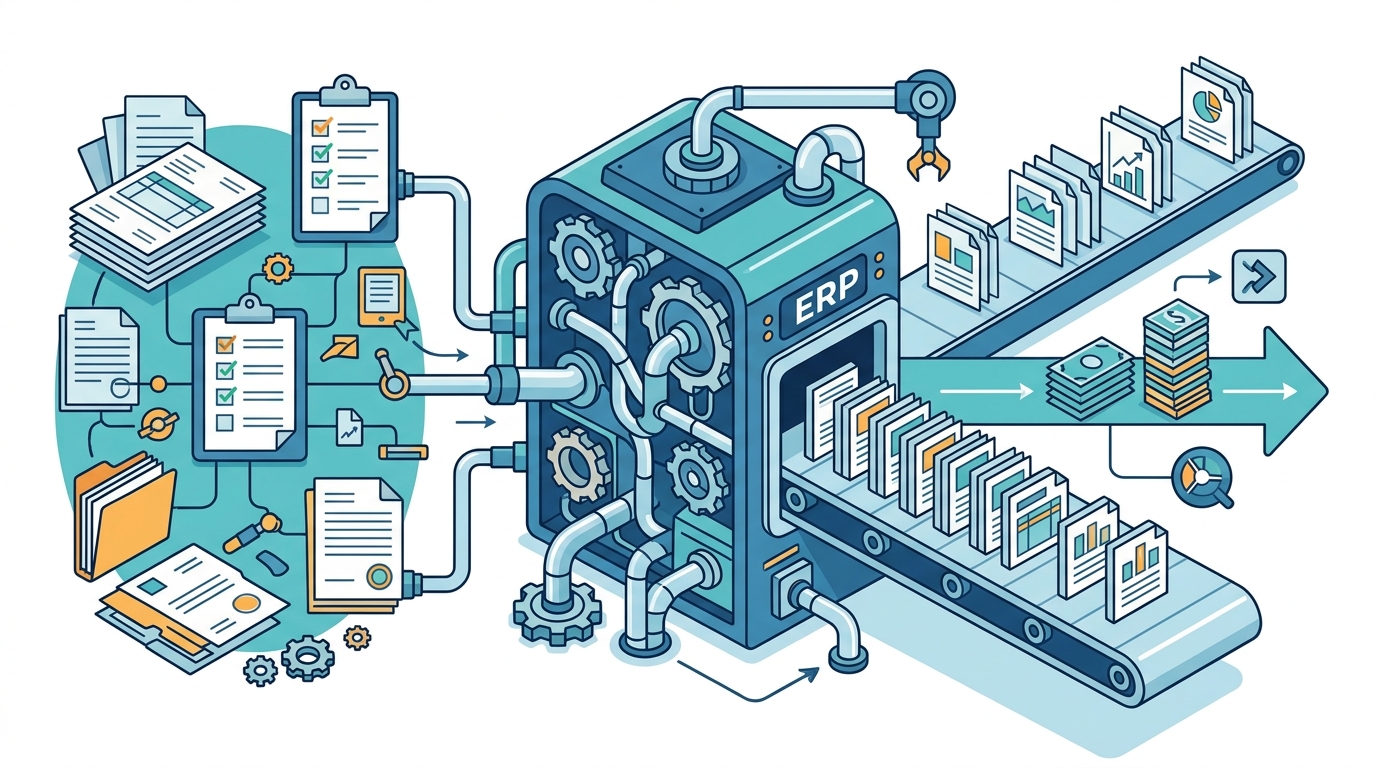
eProcurement Software
eProcurement software is a category of technology used to automate the internal and external processes associated with procurement, strategic sourcing, and purchasing. Solutions like Eyvo's procurement software extend these capabilities with AI-powered automation, supplier management, and real-time analytics.
API Integration
An API (Application Programming Interface) is a set of protocols that allows two software systems to exchange data automatically without manual intervention. APIs are the backbone of most modern procurement-ERP connections.
Step-by-Step Integration Process
1. Audit Your Current Systems
Start by mapping every procurement workflow across departments. Document which data fields your ERP manages (budgets, invoices, payments) and which your procurement tool handles (requisitions, approvals, supplier records). Identify where data and processes intersect across ERPs, P2P platforms, and supplier management portals.
2. Involve Stakeholders Early
Bring finance, IT, and procurement leaders into the planning phase before any technical work begins. Alignment on goals, data ownership, and timelines prevents scope creep and ensures buy-in across the organization. Eyvo offers dedicated implementation services to facilitate this cross-functional planning.
3. Choose Your Integration Method
Select the technical approach that matches your IT resources and timeline. The comparison table below outlines the most common options. Platforms with pre-built integration modules can significantly reduce deployment complexity.
4. Test, Pilot, and Roll Out
Run a pilot integration with a single department or spend category before going organization-wide. Validate that purchase orders, invoices, and approval statuses sync correctly between both systems. Only after the pilot succeeds should you expand to full deployment.
Common Integration Methods Compared
| Method | Best For | Complexity | Time to Deploy | Cost |
|---|---|---|---|---|
| Native/Pre-built Connector | Organizations using major ERPs (SAP, Oracle, NetSuite) | Low | 2 to 6 weeks | Low to Medium |
| REST API Integration | Custom or niche ERP systems | Medium | 4 to 12 weeks | Medium |
| Middleware (iPaaS) | Complex multi-system environments | Medium to High | 6 to 16 weeks | Medium to High |
| Flat File / CSV Exchange | Legacy systems with limited API support | Low | 1 to 4 weeks | Low |
| Custom Point-to-Point | Highly specialized workflows | High | 8 to 20+ weeks | High |
Eyvo supports multiple integration paths. The platform can effortlessly integrate with existing ERP systems and accounting tools to ensure smooth data synchronization and reduce manual work. Eyvo also connects with messaging apps like Microsoft Teams, Slack, and WhatsApp for on-the-go approval notifications.
Challenges and How to Overcome Them
Data Mapping Conflicts
ERP and procurement systems often use different field names, formats, and categorizations. Before integration, create a shared data dictionary that maps every field from one system to the other. This step alone prevents the majority of syncing errors.
Supplier Onboarding at Scale
Procurement solutions that allow batch supplier deployment provide greater scalability. Your integration hub should connect buyers and suppliers through direct integration or web portals. Eyvo's vendor portal simplifies this process by giving suppliers self-service access.
Change Management Resistance
New technology only works if people use it. Invest in training and communicate the benefits clearly to every user group. Eyvo provides procurement training services to accelerate adoption and ensure teams feel confident with the new workflows.
Measurable Benefits of a Connected System
A successful procurement-ERP integration delivers compounding returns. Organizations gain real-time visibility into their procurement lifecycle with customizable dashboards, enabling them to efficiently track orders, monitor budgets, and ensure compliance with organizational policies at every step.
ERP systems that integrate procurement with inventory control help maintain optimal stock levels, avoid over-ordering, and trigger reorders automatically based on usage patterns. Detailed logs of all procurement actions from requisition to payment become available for audits, financial reviews, and internal accountability.
The centralization of data also helps you manage indirect spend catalogs, materials management, and plant maintenance while providing real-time synchronization across all modules. For organizations looking to deepen their procurement integration strategy, the long-term payoff includes lower processing costs, faster cycle times, and stronger supplier relationships.
Key Takeaways
- Procurement-ERP integration eliminates data silos, reducing manual entry and reporting errors across finance and purchasing teams.
- Companies that integrate procurement and financial systems can reduce procurement costs by 10 to 15 percent.
- Pre-built connectors are the fastest path to integration for organizations using major ERPs like SAP, Oracle, or NetSuite.
- Stakeholder alignment between IT, finance, and procurement is essential before any technical work begins.
- Pilot testing with a single department prevents costly errors during full-scale rollout.
- Supplier onboarding through self-service portals and batch deployment scales integration faster than manual methods.
- Real-time dashboards and audit trails are the most immediate visible benefits after go-live.
Frequently Asked Questions
What is procurement-ERP integration?
Procurement-ERP integration is the process of connecting your procurement management software with your enterprise resource planning system so that data like purchase orders, invoices, budgets, and supplier records flows automatically between both platforms without manual re-entry.
Which ERP systems can integrate with procurement tools?
Most modern procurement platforms support integration with major ERPs including SAP, Oracle, Microsoft Dynamics, NetSuite, Workday, and QuickBooks. Eyvo, for example, offers pre-built connectors and API-based integration for a wide range of ERP and accounting systems.
How long does a typical integration take?
Timelines vary based on the method used. Pre-built connectors can be deployed in as little as two to six weeks, while custom point-to-point integrations may take eight to twenty weeks or more depending on system complexity.
What are the biggest risks of a failed integration?
The most common risks include data duplication, broken approval workflows, invoice mismatches, and user rejection due to poor change management. Thorough testing and early stakeholder involvement mitigate most of these risks.
Can I integrate procurement software with a legacy ERP?
Yes. Even legacy systems with limited API support can be connected using flat file or CSV exchange methods. While not as real-time as API integration, this approach still eliminates most manual data entry.
Does Eyvo support ERP integration?
Yes. Eyvo integrates into companies' current computer systems while simultaneously providing live reports and analytics, and creating open budgets, full audit trails, and spending control over all departments and regions. Learn more on the third-party integrations page.
What data should sync between procurement and ERP?
At a minimum, you should synchronize purchase orders, goods receipts, invoices, supplier master data, budget codes, and general ledger accounts. Bidirectional sync ensures both systems always reflect the same current state.
How do I measure integration success?
Track metrics such as purchase order cycle time, invoice processing time, data entry error rate, maverick spend percentage, and user adoption rate. Compare these against your pre-integration baseline to quantify ROI.
Ready to Connect Your Procurement and ERP Systems?
Eyvo's AI-powered eProcurement platform is built for seamless ERP integration. Whether you run SAP, Oracle, NetSuite, or a custom system, our team will map, connect, and validate the integration so your data flows without friction. Request a free demo today and see how Eyvo can unify your procurement and financial systems in weeks, not months.