

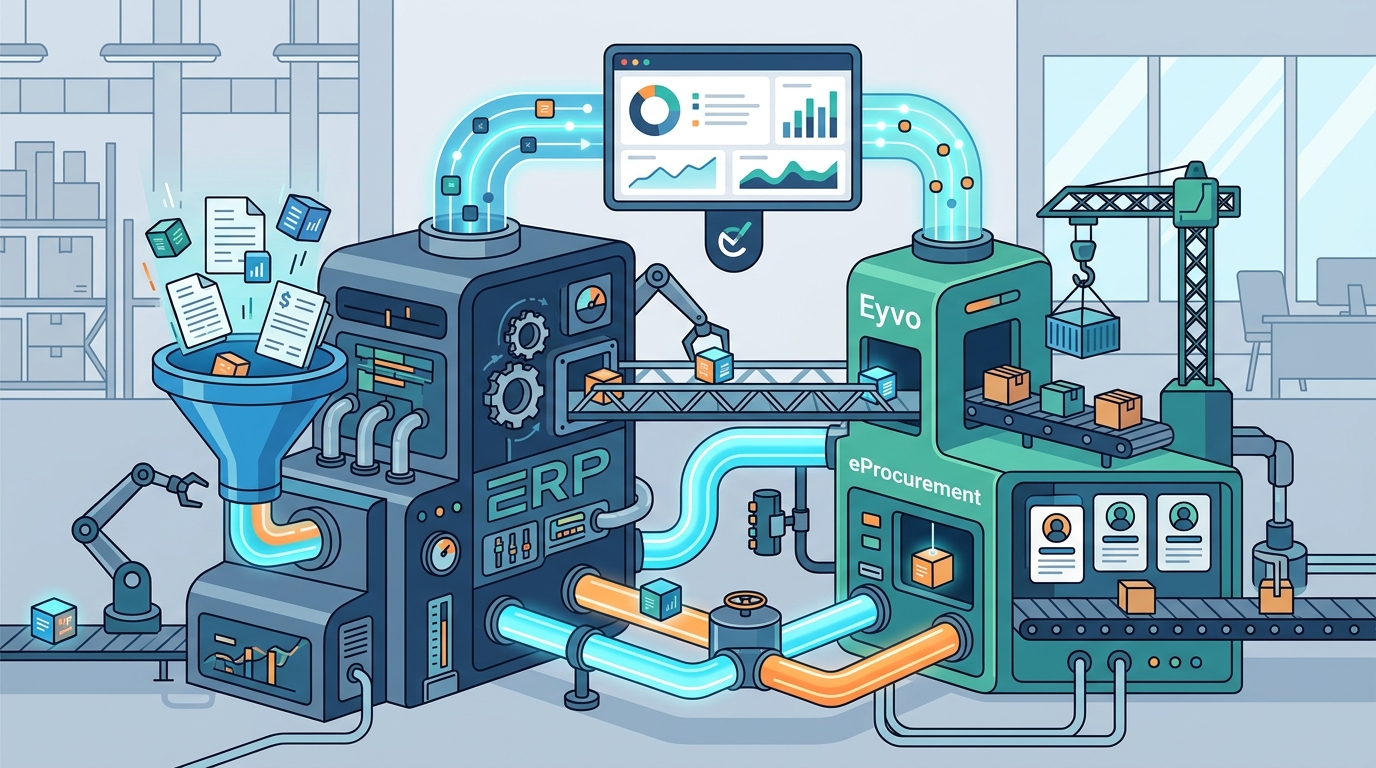
Connecting your procurement management tools with an existing Enterprise Resource Planning (ERP) system is one of the most impactful moves a business can make to reduce manual work, improve data accuracy, and gain real-time spend visibility. Yet many organizations struggle with the process because of data silos, incompatible formats, and unclear integration strategies. In this guide, you will learn exactly how to plan, execute, and optimize a procurement-ERP integration so your finance, operations, and purchasing teams all work from a single source of truth.
Why Procurement-ERP Integration Matters
Most organizations already rely on an ERP system for finance and accounting, but ERP platforms alone often fall short when it comes to everyday procurement activities like sourcing, supplier collaboration, and spend analytics. Running separate, disconnected tools forces teams to transfer data manually between platforms, leading to errors, approval delays, and limited visibility into spending.
According to a 2024 Deloitte study, nearly 70% of procurement leaders struggle to manage vendors efficiently due to disconnected systems. Integrating procurement software with your ERP eliminates those gaps and gives every stakeholder access to consistent, real-time data.
Key Terms You Need to Know
ERP (Enterprise Resource Planning) is a software solution that helps organizations manage and integrate core business processes on a centralized platform. Procurement-ERP integration is the seamless connection between a procurement tool and an ERP system that enables data synchronization, real-time information exchange, and process automation. API (Application Programming Interface) is a set of protocols that allows two software systems to communicate and share data programmatically.
Common Integration Methods
Not every integration looks the same. The right approach depends on your ERP vendor, your procurement platform, and the complexity of your data flows.
| Method | Best For | Complexity | Speed to Deploy |
|---|---|---|---|
| Native / Pre-built Connectors | Common ERPs (SAP, Oracle, NetSuite) | Low | Days to weeks |
| REST / SOAP APIs | Custom or hybrid environments | Medium | Weeks to months |
| Middleware (iPaaS) | Multi-system landscapes | Medium-High | Weeks to months |
| Flat-file / CSV Exchange | Legacy ERPs with limited API support | Low | Days |
| cXML / EDI | High-volume B2B transactions | Medium | Weeks |
Eyvo's integration module supports multiple methods, including API connectors and flat-file imports, so it can adapt to virtually any ERP environment.
Step-by-Step Integration Process
1. Audit Your Current Systems
Start by documenting every system that touches procurement data: your ERP, accounting software, supplier portals, and any spreadsheet-based trackers. Identify which data fields (purchase orders, invoices, supplier records, budget codes) need to flow between systems.
2. Define Integration Goals and Data Mapping
Clarify what you are solving for. Common goals include eliminating duplicate data entry, enabling real-time budget checks, and automating three-way invoice matching. Map each data element from your procurement tool to the corresponding ERP field. Accurate data mapping is the foundation of every successful integration project.
3. Choose Your Integration Method and Deploy
Select the method from the table above that fits your technical landscape. Cloud-based procurement platforms like Eyvo's AI-powered procurement software simplify this step because they offer standardized connectors and certified ERP adapters. Always run a pilot with a subset of purchase orders before full deployment, and involve finance, IT, and procurement stakeholders from the beginning.
Core Benefits of a Connected System
When procurement and ERP data live in sync, the advantages compound quickly:
- Reduced manual effort: Automated data transfer between systems eliminates repetitive data entry and reduces errors.
- Real-time spend visibility: Teams can track orders, monitor budgets, and spot spending anomalies instantly through advanced procurement analytics.
- Stronger compliance: Integrated systems enforce approval workflows and audit trails automatically, reducing the risk of maverick spend.
- Better supplier management: Centralizing supplier records across procurement and ERP improves onboarding, performance tracking, and collaboration via tools like the Eyvo vendor portal.
- Cost savings: Research shows that companies integrating procurement and financial systems can lower procurement costs by 10 to 15 percent through improved visibility and control.
Challenges and How to Overcome Them
Data Quality and Formatting Issues
Inconsistent supplier names, duplicate records, and mismatched field formats are the top blockers. Cleanse your master data before integration begins and establish governance rules to keep it clean going forward.
Rigid ERP Integration Requirements
Some SaaS procurement solutions have strict requirements for ERP connectivity. Choose a platform with standardized integration adapters that remain certified when the ERP is upgraded. Eyvo, for example, is built for flexibility and can be customized to match specific business workflows.
Change Management and User Adoption
Technology alone does not guarantee success. Invest in training, communicate the benefits to end users, and phase the rollout so teams can adapt gradually. Eyvo's procurement training services help organizations accelerate adoption.
Key Takeaways
- Procurement-ERP integration eliminates data silos and gives finance, operations, and purchasing a single source of truth.
- An ERP system is a centralized business management platform; it still needs a purpose-built procurement layer for sourcing, supplier management, and spend analytics.
- Common integration methods include native connectors, APIs, middleware, flat-file exchange, and cXML/EDI.
- Always audit existing systems and map data fields before selecting an integration approach.
- Involve IT, finance, and procurement stakeholders from day one to avoid misalignment.
- Companies that integrate procurement and financial systems typically see 10 to 15 percent lower procurement costs.
- Eyvo offers a dedicated integration module, customizable connectors, and over 20 years of eProcurement expertise to simplify the process.
Frequently Asked Questions
What is procurement-ERP integration?
Procurement-ERP integration is the process of connecting a procurement management tool with an Enterprise Resource Planning system so that data such as purchase orders, invoices, and supplier records flows automatically between both platforms.
Which ERP systems can procurement software integrate with?
Most modern procurement platforms integrate with major ERPs including SAP, Oracle, Microsoft Dynamics, and NetSuite. Eyvo supports third-party integrations with a wide range of ERP and accounting tools.
How long does a procurement-ERP integration take?
Timelines vary by complexity. Simple flat-file integrations can be live in days, while API or middleware integrations typically take weeks to a few months. Industry estimates suggest initial go-live in 3 to 6 months for larger deployments.
What are the biggest risks of not integrating?
Without integration, teams face duplicate data entry, delayed approvals, limited spend visibility, and higher risk of maverick purchasing. These issues grow as the organization scales.
Do I need to replace my ERP to integrate procurement software?
No. A well-designed procurement platform layers on top of your existing ERP without replacing it. Eyvo integrates into companies' current systems while simultaneously providing live reports, analytics, and full audit trails.
How much does procurement-ERP integration cost?
Costs depend on the integration method, number of data points, and level of customization. Cloud-based solutions generally have lower upfront costs than on-premise setups. You can request a tailored quote from Eyvo for a precise estimate.
Can small businesses benefit from this integration?
Absolutely. Whether you are a startup or a large enterprise, connecting procurement and ERP data improves accuracy and saves time. Eyvo's software is designed to scale and adapt to organizations of all sizes.
Ready to Connect Your Procurement and ERP Systems?
Eyvo's AI-powered eProcurement platform integrates seamlessly with your existing ERP and accounting tools, giving you real-time visibility, automated workflows, and full spend control. Book a free demo today and see how quickly you can unify your procurement operations.