

Supplier onboarding is the process of collecting, verifying, and approving a new supplier's information before they can start doing business with your company. When handled manually, it drains procurement teams with endless emails, duplicate data entry, and compliance gaps. Research shows that manual onboarding can cost organizations up to $35,000 per supplier, while automated processes bring that figure below $2,500. In this guide, we walk through exactly how to automate each stage of supplier onboarding so your team can focus on strategic sourcing instead of chasing spreadsheets.
Why Manual Supplier Onboarding Fails
Traditional supplier onboarding relies on email exchanges, paper forms, and spreadsheet tracking. These methods create data silos, slow down approvals, and introduce costly errors. According to a 2024 Deloitte report, nearly 60% of procurement teams cite managing supplier data during onboarding as their biggest challenge.
The typical manual workflow involves 3 to 7 email exchanges per document before a complete submission arrives. Sequential approval bottlenecks mean finance cannot start reviewing until legal finishes, adding days or weeks to the cycle. Creating vendor records separately in ERP, payment, and procurement systems adds 2 to 4 hours per vendor and multiplies procurement risk through manual error.
What Is Automated Supplier Onboarding?
Automated supplier onboarding is the use of digital tools and workflows to collect, validate, and approve vendor information without manual intervention at each step. A supplier self-service portal is a secure digital interface where vendors independently submit documents, tax IDs, banking details, and certifications. Automation replaces email chasing with structured portals, sequential approvals with parallel routing, and manual system setup with automated provisioning.
Platforms like Eyvo's AI-powered procurement software offer built-in supplier portals, automated approval workflows, and seamless ERP integrations that handle onboarding from registration through activation.
Step-by-Step: How to Automate Your Supplier Onboarding
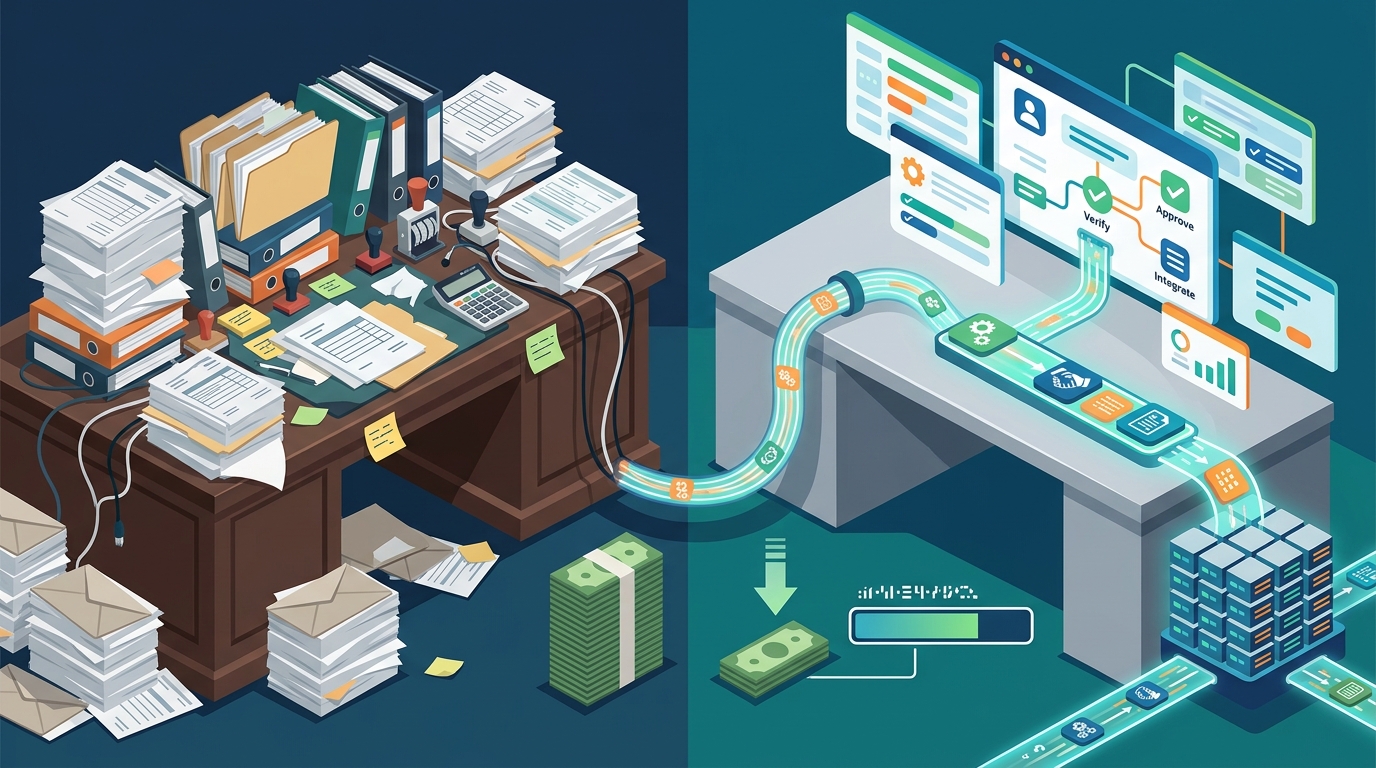
Step 1: Deploy a Supplier Self-Service Portal
Start by replacing email-based document collection with a centralized portal. Suppliers register through digital forms and upload business details, tax documentation, insurance certificates, and banking information. Real-time field validation catches incomplete entries before submission, eliminating back-and-forth. Eyvo provides a dedicated Supplier Portal where vendors can manage their profiles, update pricing, and submit compliance documents in one place.
Step 2: Automate Compliance and Risk Screening
Configure your system to run automated due diligence checks at intake. This includes verifying business licenses, screening against sanctions lists (OFAC, EU, UN), and validating tax forms such as W-9 or W-8. Risk-based routing is a workflow design where the system automatically assigns different approval paths based on supplier risk level, spend category, or geography. Eyvo's supplier credit score feature enables real-time risk assessment without manual review.
Step 3: Enable Parallel Approval Workflows
Replace sequential department reviews with parallel approval routing. Legal, finance, and procurement can review simultaneously, cutting cycle times dramatically. Eyvo's multi-level approval workflows let you configure logic-based routing so high-risk vendors go to senior approvers while routine suppliers sail through faster.
Step 4: Sync Approved Data to Your ERP Automatically
Once a supplier is approved, their master data should flow directly into your ERP, accounting, and procurement systems without re-keying. This eliminates duplicate records and version conflicts. Eyvo integrates seamlessly with major ERP systems, communication tools like Microsoft Teams and Slack, and third-party accounting platforms to ensure a single source of truth.
Step 5: Monitor and Continuously Improve
Track onboarding KPIs such as cycle time, cost per supplier, compliance rate, and supplier satisfaction. Use dashboard analytics to identify bottlenecks and refine workflows over time. Eyvo's advanced reporting and analytics provide real-time visibility into every stage of the supplier lifecycle.
Manual vs. Automated Onboarding: A Side-by-Side Comparison
| Factor | Manual Process | Automated Process |
|---|---|---|
| Cost per Supplier | $700 - $35,000 | Under $2,500 |
| Average Cycle Time | 2 - 6 weeks | Hours to days |
| Document Collection | Email chains (3-7 exchanges) | Self-service portal upload |
| Approval Routing | Sequential (days per department) | Parallel (simultaneous review) |
| ERP Data Entry | Manual re-keying in multiple systems | Automatic sync from approved record |
| Compliance Screening | Often skipped under time pressure | 100% automated coverage |
| Audit Trail | Incomplete paper trails | Full digital record of every action |
Sources: Epiq Tech, Kodiak Hub / Harvard Business Review 2023
Key Features to Look for in Onboarding Software
Not all procurement platforms handle supplier onboarding equally. When evaluating solutions, prioritize these capabilities:
- Self-service supplier portal for independent document submission and profile management
- Configurable approval workflows with risk-based routing logic
- Automated compliance checks including sanctions screening and tax validation
- ERP and accounting integration to eliminate duplicate data entry
- Real-time dashboards showing onboarding progress, pending approvals, and supplier status
- Modular pricing so you pay only for features you need
Eyvo's platform checks every box above. With modular, AI-powered procurement software, you select the modules that fit your requirements and pay only for what you use.
The ROI of Automating Supplier Onboarding
The business case is clear. Organizations using automated portals can reduce per-supplier onboarding cost by over 90%, dropping from $35,000 to roughly $2,400 according to SupplierGateway research. For a company onboarding 500 suppliers annually, that translates to millions in process cost savings each year.
Beyond direct savings, automation delivers faster time-to-transaction, stronger compliance coverage, and better supplier relationships. An AFP survey found that 79% of organizations experienced payment fraud attacks, many stemming from insecure manual vendor data collection. Automated validation of bank details and tax IDs before approval significantly reduces this exposure.
Key Takeaways
- Manual supplier onboarding costs up to $35,000 per vendor; automation reduces this by over 90%.
- Self-service supplier portals eliminate email chasing and put vendors in control of their own data.
- Parallel approval workflows cut cycle times from weeks to days or hours.
- Automatic ERP sync removes duplicate data entry and creates a single source of truth.
- Automated compliance screening ensures 100% coverage, even when teams are busy.
- Tracking KPIs like onboarding cycle time and cost per supplier drives continuous improvement.
- Eyvo's modular, AI-powered platform covers the full supplier onboarding lifecycle from portal to ERP integration.
Frequently Asked Questions
What is supplier onboarding?
Supplier onboarding is the process of collecting, verifying, and approving a new supplier's information before they begin transacting with your organization. It includes gathering legal documents, tax forms, banking details, and compliance certifications.
How much does manual supplier onboarding cost?
Estimates range from $700 to $35,000 per supplier depending on process maturity. Organizations that onboard hundreds of vendors annually can spend millions on manual onboarding labor alone.
How does automation reduce manual data entry?
Automation replaces email-based document collection with self-service portals, validates data in real time, and syncs approved supplier records directly into ERP systems, eliminating the need to re-key information across multiple platforms.
What is a supplier self-service portal?
A supplier self-service portal is a secure online interface where vendors independently register, upload required documents, update their details, and track their onboarding status without procurement team intervention.
How long does automated onboarding take compared to manual?
Manual onboarding typically takes 2 to 6 weeks. Automated onboarding can complete the process in hours to a few days, depending on supplier complexity and risk level.
Can small businesses benefit from onboarding automation?
Yes. AI solutions are scalable and can be tailored for organizations of any size. Eyvo's modular approach means small businesses pay only for the features they need while still reducing administrative workload and risk.
What KPIs should I track for supplier onboarding?
Key metrics include onboarding cycle time, cost per supplier onboarded, compliance rate, supplier performance post-onboarding, and retention rate. These help procurement teams identify bottlenecks and measure improvement.
Does Eyvo integrate with existing ERP systems?
Yes. Eyvo integrates seamlessly with major ERP systems, accounting tools, and messaging platforms like Microsoft Teams, Slack, and WhatsApp to ensure smooth data synchronization across your entire procurement ecosystem.
Ready to Automate Your Supplier Onboarding?
Stop losing time and money to manual data entry. Eyvo's AI-powered eProcurement platform gives you a dedicated supplier portal, automated compliance checks, configurable approval workflows, and seamless ERP integration, all in one modular system. Request a free demo today and see how Eyvo can transform your supplier onboarding from a bottleneck into a competitive advantage.