

How to Integrate Procurement Management Tools with Your Existing ERP System
Connecting procurement software to an Enterprise Resource Planning (ERP) system is one of the highest-impact moves an organization can make to improve purchasing efficiency and financial visibility. Yet many teams struggle with disconnected workflows, duplicate data entry, and approval bottlenecks that slow operations down. In this guide, you will learn a clear, step-by-step process for integrating procurement management tools with your ERP, the benefits you can expect, common pitfalls to avoid, and how platforms like Eyvo's procurement software make the entire process seamless.
Why Integrate Procurement Tools with Your ERP?
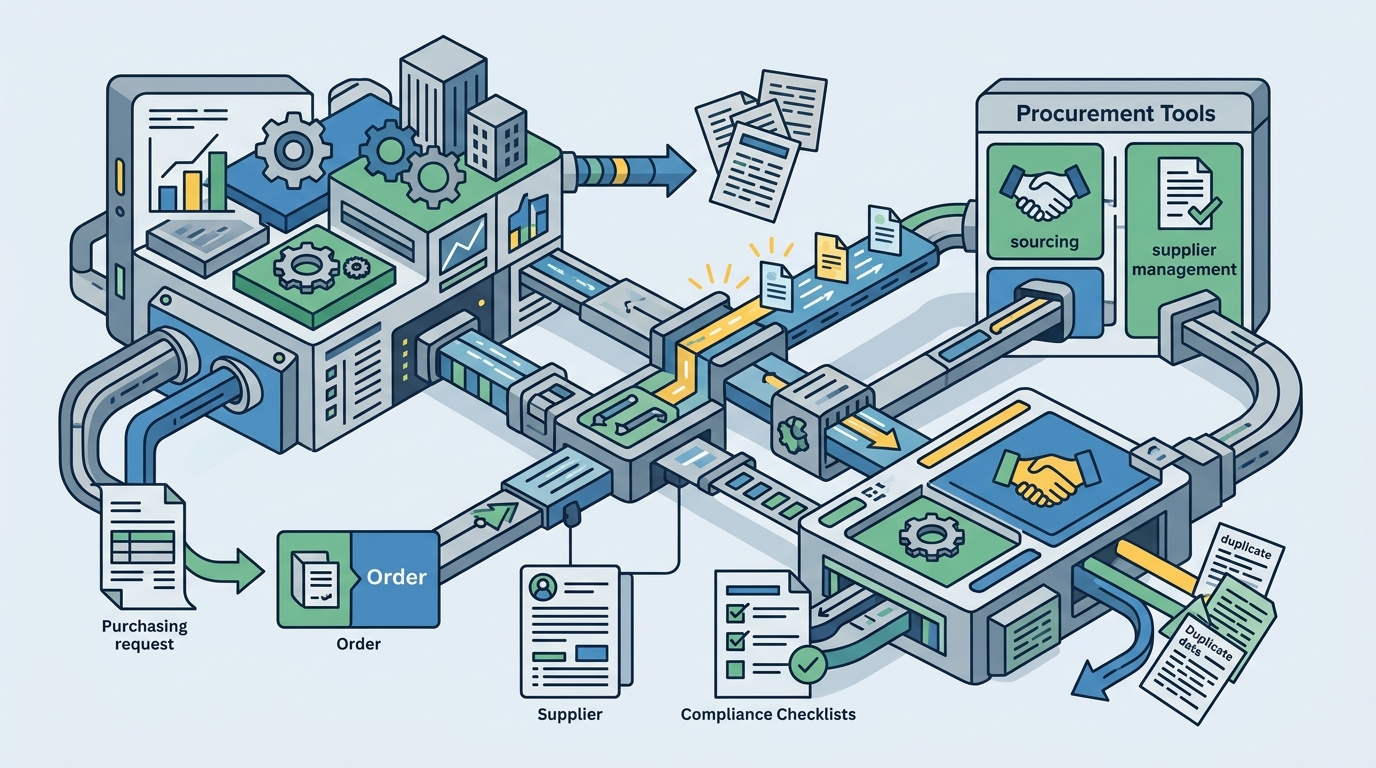
Most ERP systems handle finance, accounting, and operational data well, but they were not designed for strategic procurement functions like sourcing, supplier collaboration, or compliance tracking. When procurement teams rely on separate, disconnected platforms, manual data entry increases, approval workflows stall, and spend visibility shrinks.
According to Deloitte research cited by Spendflo, nearly 70% of procurement leaders say they struggle to manage vendors efficiently due to disconnected systems and manual approvals. A dedicated procurement layer that feeds data directly into your ERP solves this problem without requiring a full system replacement.
Key Terms You Should Know
ERP (Enterprise Resource Planning)
An ERP system is a software solution that helps organizations manage and integrate their core business processes on a centralized platform. It typically covers finance, HR, inventory, and operations.
eProcurement
eProcurement is the electronic management of the entire purchasing lifecycle, from requisition and approval through to purchase order dispatch and invoice matching. Cloud-based eProcurement tools like Eyvo's eBuyerAssist sit in front of your ERP and handle the procurement-specific workflows it lacks.
API (Application Programming Interface)
An API is a set of protocols that allows two software systems to exchange data automatically. APIs are the most common method for real-time procurement-to-ERP integration today.
Step-by-Step Integration Process
1. Audit Your Current ERP and Procurement Gaps
Start by evaluating the capabilities of your existing ERP system. Identify which procurement processes need improvement, analyze ERP limitations, and gather input from procurement teams to understand operational needs. Document every manual handoff between your purchasing workflows and your financial system.
2. Select a Compatible Procurement Platform
Choose procurement software that offers certified or pre-built connectors for your ERP. Eyvo's integration module can link to any third-party system including accounts, ERP, and existing legacy solutions. The platform integrates with major accounting and ERP systems such as SAP, Oracle, and QuickBooks.
3. Map Data Fields and Workflows
Define exactly which data points flow between systems: purchase requisitions, purchase orders, goods receipts, invoices, and budget codes. Align approval hierarchies so that both platforms enforce the same policies. Eyvo's purchase order software ensures control and compliance at every step.
4. Test in a Sandbox Environment
Pilot integrations before full deployment. Run parallel transactions in a staging environment to confirm data accuracy, approval routing, and error handling. Involve finance, IT, and procurement stakeholders early to catch issues before go-live.
5. Deploy, Train, and Monitor
Roll out in phases, starting with a single business unit or site. Track KPIs like order cycle time, data entry errors, and spend visibility. Eyvo's modular platform allows you to add capabilities incrementally as your integration matures.
Integration Methods Compared
| Method | Speed | Complexity | Best For |
|---|---|---|---|
| REST / SOAP API | Real-time | Medium | Organizations needing live data sync between procurement and ERP |
| Middleware (iPaaS) | Near real-time | Medium-High | Multi-ERP environments or complex transformation rules |
| Flat-file / CSV Export | Batch (scheduled) | Low | Small teams with limited IT resources |
| ODBC / SQL Direct Access | Real-time | High | On-premises ERP systems with database-level access |
| EDI / cXML | Near real-time | Medium | Supplier-facing document exchange (POs, invoices) |
Eyvo supports multiple methods, including its open API, ODBC SQL access via VPN, and SSO/SAML/ADFS security, giving IT teams flexibility regardless of their ERP landscape.
Common Challenges and How to Overcome Them
Data Inconsistency
When supplier records, GL codes, or item catalogs differ between systems, integration breaks down. Standardize your master data before connecting platforms. eProcurement allows centralization of data, helping you manage indirect spend catalogs and materials management with real-time ERP synchronization.
Rigid ERP Customization Requirements
Many SaaS procurement solutions have strict requirements for integration with ERP solutions. Look for tools with certified, standardized integration adapters that remain compatible when your ERP is upgraded. Cloud-based procurement platforms reduce the burden of on-site installations and ongoing maintenance costs.
Stakeholder Resistance
Integration projects stall when finance, IT, and procurement teams are not aligned. Involve all stakeholders early, define clear integration goals, and demonstrate quick wins like automated three-way invoice matching through Eyvo's invoice matching module.
Measurable Benefits of a Connected System
Research indicates that companies integrating procurement and financial systems lower their procurement costs by 10 to 15 percent thanks to better visibility and control. Organizations that invest in procurement digitization achieve their cost savings targets 96% of the time versus 80% for laggards, according to Ivalua's analysis of industry data.
Beyond cost savings, integration delivers real-time spend dashboards, faster purchase approvals, reduced maverick spending, and stronger audit trails. Eyvo's platform provides real-time visibility and insights into your procurement lifecycle with customizable dashboards, so leadership always has an accurate financial picture.
Key Takeaways
- ERP systems handle finance well but lack strategic procurement features like sourcing, supplier management, and compliance tracking.
- A dedicated procurement layer (like Eyvo) sits in front of your ERP to fill those gaps without replacing your core system.
- APIs are the most common and flexible integration method for real-time data synchronization.
- Standardize master data (suppliers, GL codes, catalogs) before you begin integration to avoid data mismatches.
- Involve finance, IT, and procurement stakeholders from day one to prevent resistance and scope creep.
- Companies that integrate procurement with ERP systems can reduce procurement costs by 10 to 15 percent.
- Phased rollouts and sandbox testing are essential to a smooth go-live.
Frequently Asked Questions
What is procurement-ERP integration?
Procurement-ERP integration is the process of connecting a procurement management platform with an Enterprise Resource Planning system so that purchasing data, approvals, and financial records flow automatically between both systems without manual re-entry.
Which ERP systems does Eyvo integrate with?
Eyvo's eBuyerAssist platform integrates with major accounting and ERP systems such as SAP, Oracle, and QuickBooks. It also connects with messaging apps like Microsoft Teams, Slack, and WhatsApp for on-the-go approval notifications.
How long does procurement-ERP integration take?
Implementation timelines range from a few weeks for cloud-based, pre-built connectors to several months for heavily customized on-premises setups. Eyvo's cloud-native architecture and open API typically accelerate deployment compared to traditional solutions.
Do I need to replace my ERP to add procurement tools?
No. Modern eProcurement platforms are designed to sit alongside your existing ERP, not replace it. Eyvo can integrate its buying platform in front of your existing ERP solution to give you best-of-breed procurement without disrupting core infrastructure.
What data flows between procurement software and an ERP?
The most common data exchange points include purchase requisitions, purchase orders, goods receipts, invoices, supplier master records, budget codes, and payment confirmations. These touchpoints enable financial control and accurate reporting.
How does integration reduce maverick spending?
When procurement and ERP share a single approval workflow, every purchase must pass through policy checks before reaching finance. This prevents off-contract buying and ensures purchases align with agreed contract terms and budgets.
Is cloud-based integration more secure than on-premises?
Cloud procurement platforms like Eyvo use SSL encryption, two-factor authentication, SAML/ADFS single sign-on, and professionally managed data centers audited to internationally recognized standards. Security is often stronger than self-hosted alternatives.
What ROI can I expect from integration?
Organizations typically see 10 to 15 percent procurement cost reductions, faster cycle times, fewer data entry errors, and improved audit readiness. Public sector organizations implementing eProcurement have reported 20 to 30 percent savings.
Ready to Connect Your Procurement and ERP Systems?
Eyvo has over 20 years of experience helping organizations across the UK and USA integrate procurement tools with their existing ERP and accounting systems. Whether you run SAP, Oracle, QuickBooks, or a legacy platform, our team can tailor a solution to your exact requirements. Request a free demo today and see how quickly you can unify your procurement and financial data.