

How to Automate Supplier Onboarding and Reduce Manual Data Entry
Manual supplier onboarding is one of the most time-consuming bottlenecks in procurement. Teams juggle scattered emails, duplicate spreadsheets, and endless follow-ups just to get a single vendor into their system. According to Gartner, supplier collaboration has skyrocketed in priority for 88% of procurement leaders in the past 24 months. The good news? Automating your supplier onboarding process can cut cycle times by 50 to 80 percent while dramatically improving data quality. This guide walks you through exactly how to do it with the right strategy and tools.
What Is Supplier Onboarding?
Supplier onboarding is the administrative process used to integrate a new vendor into an organization's systems and workflows. It involves collecting business details, verifying compliance documents, validating banking and tax information, and obtaining internal approvals before a vendor can receive purchase orders or payments.
A supplier onboarding tool is a digital platform that streamlines this process, from collecting information and compliance documents to approving suppliers and syncing data with your ERP. When done well, onboarding sets clear expectations and builds the foundation for a productive, long-term supplier relationship.
Why Manual Onboarding Fails at Scale
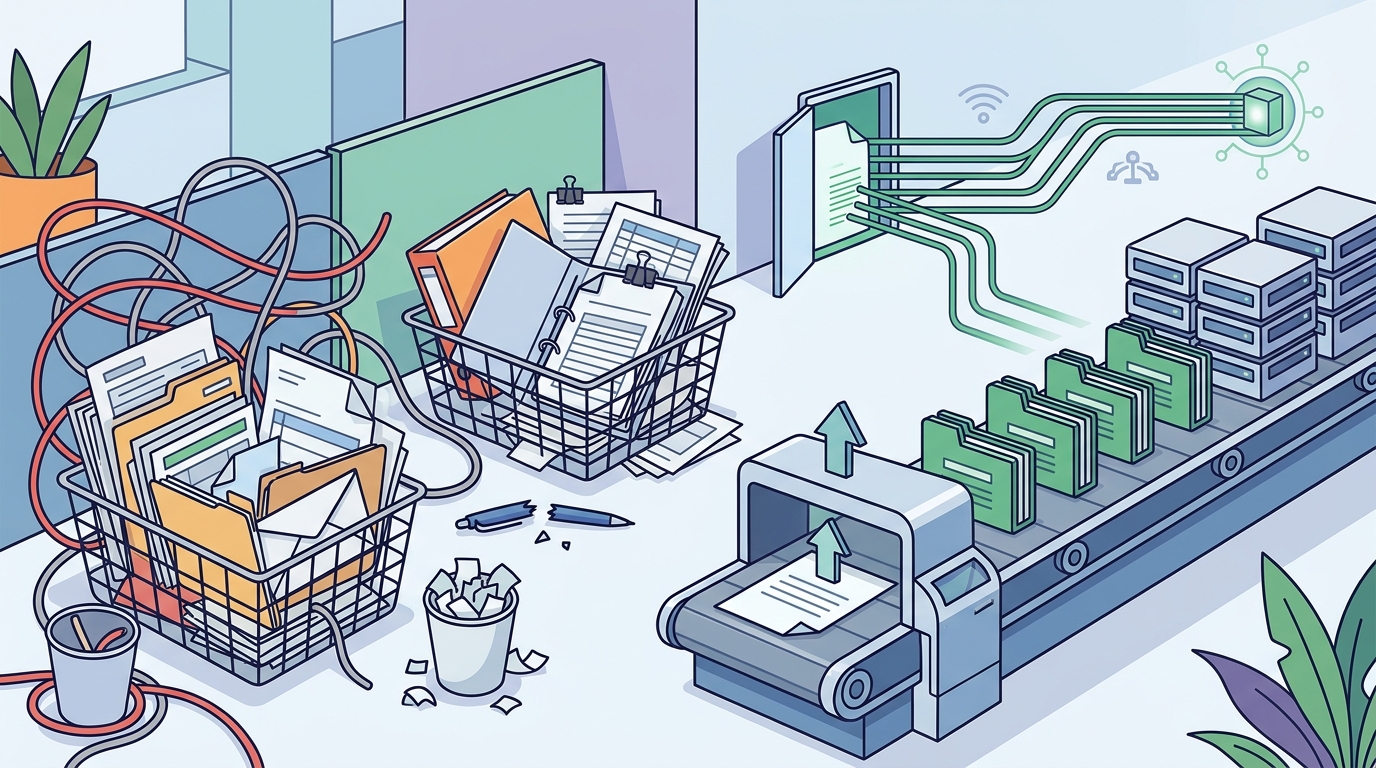
Many procurement teams still rely on emails, phone calls, and spreadsheets to onboard suppliers. These manual methods cause delays, introduce bad data, and create compliance risks. A typical manual process involves 3 to 7 email exchanges per document before a complete submission arrives.
Common Pain Points
- Incomplete or inconsistent data scattered across multiple systems
- Sequential approval bottlenecks where departments wait on each other
- Manual creation of vendor records in the ERP, payment system, and procurement tool, adding 2 to 4 hours per vendor
- No audit trail for regulators or internal compliance reviews
As your supplier base grows, these problems compound. Organizations that continue relying on disconnected onboarding processes will fall behind competitors who invest in automation.
Key Steps to Automate Supplier Onboarding
Step 1: Deploy a Self-Service Supplier Portal
Start by inviting suppliers to register through a digital self-service portal. A vendor portal lets suppliers submit business details, tax identification numbers, banking data, and certifications on their own schedule. This eliminates the email chase entirely and ensures procurement receives standardized, complete data from day one.
Step 2: Automate Compliance and Risk Screening
Automated workflows can instantly verify business licenses, run sanctions screenings (such as OFAC checks), validate tax documents like W-9 or W-8 forms, and flag discrepancies. With vendor compliance and risk management tools, you ensure 100% compliance coverage without relying on busy team members to remember every check.
Step 3: Enable Parallel Approval Routing
Replace sequential approvals with parallel routing. Instead of legal finishing before finance can start, all relevant departments review the supplier simultaneously. Configurable approval workflows based on supplier risk level, category, or region keep things moving without sacrificing controls.
Must-Have Features in Onboarding Automation Software
When evaluating software to automate supplier onboarding, look for capabilities that address both speed and governance. Procurement automation is the use of technology to replace repetitive, manual procurement tasks with software-driven workflows.
- Self-service supplier portal: Lets vendors upload documents, update details, and track their onboarding status independently
- Configurable approval workflows: Route approvals based on risk, spend category, or geography
- Automated document validation: AI-powered extraction and verification of tax forms, insurance certificates, and banking details
- ERP integration: Approved supplier data syncs directly to SAP, Oracle, NetSuite, or other systems without manual re-keying
- Audit trail and dashboards: Every step is logged and visible for compliance reviews
Eyvo's AI-powered eProcurement platform combines these capabilities with purchase order management and third-party integration, giving procurement teams a unified system from onboarding through payment.
Manual vs. Automated Onboarding: A Side-by-Side Comparison
| Factor | Manual Onboarding | Automated Onboarding |
|---|---|---|
| Average cycle time | 2 to 6 weeks | 1 to 5 days |
| Data entry errors | High (duplicate records common) | Minimal (validated at input) |
| Compliance coverage | Inconsistent; checks often skipped | 100%; automated screening |
| Audit readiness | Days to compile records | Instant; digital audit trail |
| Staff hours per vendor | 4 to 8 hours | Under 1 hour |
| Scalability | Breaks down as supplier base grows | Handles thousands of vendors |
According to research published by Moxo, AI-powered onboarding reduces cycle times by 50 to 80%, with some organizations seeing a 400% increase in speed. A global manufacturer that deployed generative AI for vendor onboarding reported a 60% reduction in time and a 50% decrease in documentation errors.
Why ERP and Procurement Integration Matters
A vendor onboarding tool is useless if it creates a data silo. Once a supplier is approved, that master data must flow directly into your ERP, payment system, and procurement platform without manual re-keying. Integration is the automated connection between your onboarding software and existing enterprise systems.
Eyvo's integration module supports seamless data synchronization across procurement, finance, and ERP platforms. This creates a single source of truth for supplier information, reducing invoice errors, payment disputes, and duplicate vendor entries across the organization.
For organizations exploring broader procurement transformation, the power of procurement automation extends well beyond onboarding into requisitions, approvals, and spend analysis.
Key Takeaways
- Supplier onboarding automation replaces email-driven chaos with structured, self-service workflows that collect standardized data from the start.
- Self-service portals let suppliers own their profile creation, reducing procurement workload and improving data accuracy.
- Parallel approval routing eliminates sequential bottlenecks, cutting cycle times from weeks to days.
- Automated compliance screening ensures every vendor is verified against sanctions lists, tax requirements, and insurance standards before activation.
- Direct ERP integration removes manual re-keying and creates a single source of truth for vendor master data.
- AI-powered tools can reduce onboarding cycle times by 50 to 80% and cut documentation errors by half.
- A digital audit trail makes compliance reviews faster and more reliable than manual record-keeping.
Frequently Asked Questions
What is automated supplier onboarding?
Automated supplier onboarding is the use of software to digitize and streamline the process of registering, verifying, and approving new vendors. It replaces manual email and spreadsheet workflows with a centralized portal, configurable approval routing, and automatic data synchronization with your ERP.
How much time does automation save during supplier onboarding?
Organizations typically reduce onboarding cycle times from several weeks to just a few days. AI-powered solutions have been shown to cut cycle times by 50 to 80%, and staff hours per vendor can drop from 4 to 8 hours down to under one hour.
What compliance checks can be automated?
Automated tools can handle sanctions screening (OFAC, global watchlists), tax ID validation, business license verification, insurance certificate tracking, and diversity or ESG certification checks. Automation ensures these checks are never skipped, even during busy periods.
Does supplier onboarding software integrate with ERP systems?
Yes. Modern onboarding platforms integrate with major ERP systems like SAP, Oracle, and NetSuite. Approved vendor master data syncs automatically, eliminating duplicate manual entry across procurement, finance, and accounting systems.
How does a self-service supplier portal work?
A self-service portal provides suppliers with a secure link to register and submit their business details, tax documents, banking information, and certificates. The portal validates entries in real time and routes completed submissions through your internal approval workflow automatically.
What role does AI play in supplier onboarding?
AI automates tasks like data extraction from documents, compliance verification, duplicate detection, and intelligent routing of approvals. Natural language processing can analyze submitted documents, while machine learning validates data accuracy and flags anomalies before they enter your systems.
Can small businesses benefit from onboarding automation?
Absolutely. AI-powered onboarding solutions are scalable and can be tailored for small businesses. They help reduce administrative workload and speed up onboarding without requiring a large procurement team, making them practical for organizations of any size.
How do I get started with automating supplier onboarding?
Begin by mapping your current onboarding process to identify bottlenecks and error-prone steps. Then evaluate eProcurement platforms that offer self-service portals, automated compliance checks, and ERP integration. Request a demo from Eyvo to see how AI-powered onboarding works in practice.
Ready to Eliminate Manual Supplier Onboarding?
Stop losing hours to email chains, spreadsheet errors, and approval delays. Eyvo's AI-powered eProcurement platform automates every step of supplier onboarding, from registration through ERP activation. Book your free demo today and see how quickly you can transform your vendor onboarding process.