

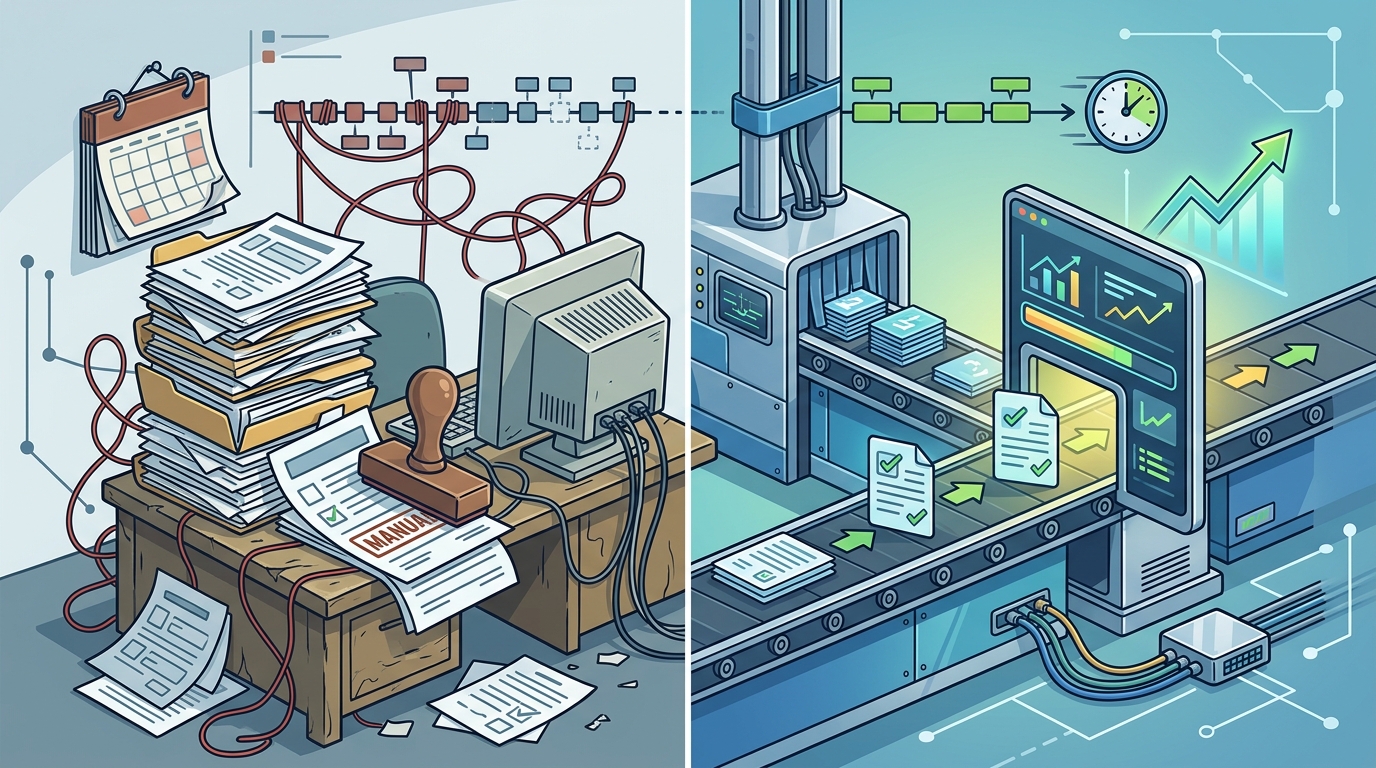
Manual supplier onboarding is one of the most time-consuming bottlenecks in procurement. Teams juggle scattered emails, incomplete spreadsheets, and redundant data entry that can stretch a single vendor setup to 45-60 days. The good news is that automation can compress that timeline to just two or three days while dramatically improving data accuracy. In this guide, we walk through the practical steps your organization can take to automate supplier onboarding, eliminate repetitive keystrokes, and build stronger vendor relationships from day one. Whether you run a lean purchasing team or manage thousands of suppliers, these strategies apply.
What Is Supplier Onboarding?
Supplier onboarding is the process by which a company brings a new vendor into its network, verifies necessary information, assesses risk, and sets up contracts and payment methods so that the supplier can officially do business. It spans everything from collecting tax IDs and banking details to running compliance screenings and creating vendor master records in your ERP.
A well-structured onboarding process is the foundation of effective vendor compliance and risk management. Without it, procurement teams inherit bad data that ripples through purchase orders, invoices, and payments for months.
Why Manual Onboarding Fails
Many procurement teams still rely on emails, PDF forms, and spreadsheets to onboard suppliers. According to HighRadius research, manual methods like these cause delays, poor data quality, and elevated fraud risk. Common failure points include:
- An average of 3-7 email exchanges per document before a complete submission arrives.
- Sequential approval bottlenecks where finance cannot start until legal finishes.
- Manual vendor record creation across multiple systems, adding 2-4 hours per vendor and introducing duplicate data entry errors.
One study tracked a company whose manual process took 45-60 days per supplier, during which 20% of potential suppliers gave up entirely. That is lost revenue and strained relationships before the partnership even begins.
The Hidden Cost of Manual Entry
Manual supplier onboarding costs an estimated $700-$1,000 per supplier, according to Kodiak Hub citing Harvard Business Review data. With automation, companies save 60-80% on those onboarding costs. For an organization adding 100 suppliers per year, that translates to savings of $42,000-$80,000 annually.
5 Steps to Automate Supplier Onboarding
Step 1: Audit Your Current Process
Before deploying any tool, map every step of your existing onboarding workflow. Identify where bottlenecks occur, which handoffs introduce errors, and where data gets re-keyed. This assessment guides your feature requirements and helps you prioritize quick wins. Eyvo's professional services team can help you run this diagnostic.
Step 2: Deploy a Self-Service Supplier Portal
A supplier portal is a secure, web-based interface where vendors submit their own documents, enter business details, and track onboarding status. Self-service portals eliminate the email chase entirely. Eyvo's vendor portal module lets suppliers upload tax forms, insurance certificates, and banking details directly into your system, with built-in validation to catch incomplete submissions in real time.
Step 3: Configure Automated Approval Workflows
Replace sequential, one-at-a-time reviews with parallel approval routing. When legal, finance, and procurement can review simultaneously, you cut days or weeks from the cycle. Eyvo supports configurable multi-level approval workflows that route onboarding requests based on supplier category, risk level, or spend threshold.
Step 4: Integrate With Your ERP and Financial Systems
Once a vendor is approved, their master data should flow directly into your ERP, payment system, and procurement platform without anyone re-keying it. Eyvo's integration module connects with systems like SAP, Oracle, and NetSuite so that approved supplier records sync automatically.
Step 5: Establish Ongoing Compliance Monitoring
Onboarding does not end at approval. Automate alerts for expiring certifications, insurance lapses, and periodic re-screening. This transforms supplier management from a one-time event into a continuous governance layer. Learn more in our guide to vendor compliance and relationship management.
Key Features to Look for in Onboarding Software
Supplier onboarding software is a specialized digital tool designed to streamline and automate the process of integrating new suppliers into a company's procurement system. When evaluating solutions, prioritize these capabilities:
- Digital self-registration forms with real-time field validation.
- Automated compliance screening against sanctions lists (OFAC), watchlists, and business registries.
- Bank account verification to prevent payment fraud before it starts.
- Configurable workflows that adapt to supplier risk, category, and geography.
- ERP integration via REST APIs or native connectors.
- Audit trails that record every step, approval, and document for compliance reviews.
Gartner notes that supplier collaboration has skyrocketed in priority for 88% of procurement leaders over the past 24 months, making these features essential rather than optional.
Manual vs. Automated Onboarding: A Side-by-Side Comparison
| Dimension | Manual Process | Automated Process |
|---|---|---|
| Avg. Time to Onboard | 45-60 days | 2-3 days |
| Cost per Supplier | $700-$1,000 | $140-$400 |
| Data Entry Errors | High (duplicate, missing fields) | Minimal (validated at entry) |
| Compliance Coverage | Inconsistent; often skipped | 100% automated screening |
| Supplier Experience | Frustrating; opaque | Transparent; self-service |
| Audit Trail | Scattered emails and files | Centralized digital record |
The Role of AI in Supplier Onboarding
AI-powered procurement is a category of software that uses machine learning, natural language processing, and robotic process automation to handle tasks traditionally performed by humans. In supplier onboarding, AI accelerates three critical areas:
- Document extraction: AI reads uploaded certificates, tax forms, and contracts to auto-populate data fields.
- Anomaly detection: Machine learning flags mismatched addresses, suspicious bank details, or inconsistent supplier information.
- Dynamic risk scoring: AI assigns and adjusts supplier risk scores based on category, geography, spend history, and real-time external data.
Organizations using intelligent procurement platforms have seen up to a 45% improvement in supplier relationship management, according to Deloitte's 2025 Global CPO Survey. Eyvo's own AI-powered procurement software incorporates these capabilities to reduce manual intervention across the entire procure-to-pay cycle.
Key Takeaways
- Manual supplier onboarding averages $700-$1,000 per vendor; automation cuts that cost by 60-80%.
- Self-service supplier portals eliminate email-based document chasing and let vendors own their profile data.
- Parallel approval workflows replace sequential bottlenecks, reducing cycle times from weeks to days.
- ERP integration prevents duplicate data entry by syncing approved vendor master records automatically.
- AI-powered tools handle document extraction, risk scoring, and compliance screening without manual review.
- Automated audit trails deliver always-ready compliance evidence that manual processes rarely produce.
- Organizations report up to a 45% improvement in supplier relationship management with intelligent procurement platforms.
Frequently Asked Questions
What is supplier onboarding automation?
Supplier onboarding automation is the use of digital workflows, self-service portals, and software integrations to replace manual steps like data entry, document collection, and approval routing when bringing a new vendor into your procurement system.
How long does automated supplier onboarding take?
Automated onboarding can reduce the cycle from 45-60 days down to 2-3 days, depending on compliance requirements and internal approval structures.
How much does manual supplier onboarding cost?
Manual onboarding costs an average of $700-$1,000 per supplier. Automation reduces that figure by 60-80%, saving tens of thousands of dollars annually for organizations with moderate supplier volumes.
What systems should onboarding software integrate with?
Look for native or API-based integrations with your ERP (SAP, Oracle, NetSuite), payment platforms, and procurement tools. The goal is to push approved vendor master data into these systems without re-keying.
Can small businesses benefit from onboarding automation?
Yes. AI-powered solutions are scalable and can be tailored for small businesses, helping them reduce administrative workload and speed up onboarding without large upfront investments. Eyvo offers flexible pricing suited to organizations of all sizes.
How does automation improve compliance?
Automated screening runs every supplier against sanctions lists, watchlists, and certification databases. Because the check is built into the workflow, it cannot be skipped when teams are busy, ensuring 100% compliance coverage.
What role does AI play in reducing manual data entry?
AI automates tasks like data extraction from uploaded documents, compliance checks against regulatory databases, and communication routing, minimizing manual input and follow-ups across the onboarding process.
How do I get started with Eyvo for supplier onboarding?
You can request a personalized walkthrough of Eyvo's vendor portal, approval workflows, and integration capabilities by visiting the demo page linked below.
Ready to Automate Your Supplier Onboarding?
Stop losing time, money, and suppliers to manual data entry. Eyvo's AI-powered eProcurement platform gives you self-service portals, automated approvals, ERP integration, and compliance screening in one unified solution. Book your free demo today and see how quickly you can transform your onboarding process.