

Electronic Tendering System: Best Practices for Mid-Sized Organizations
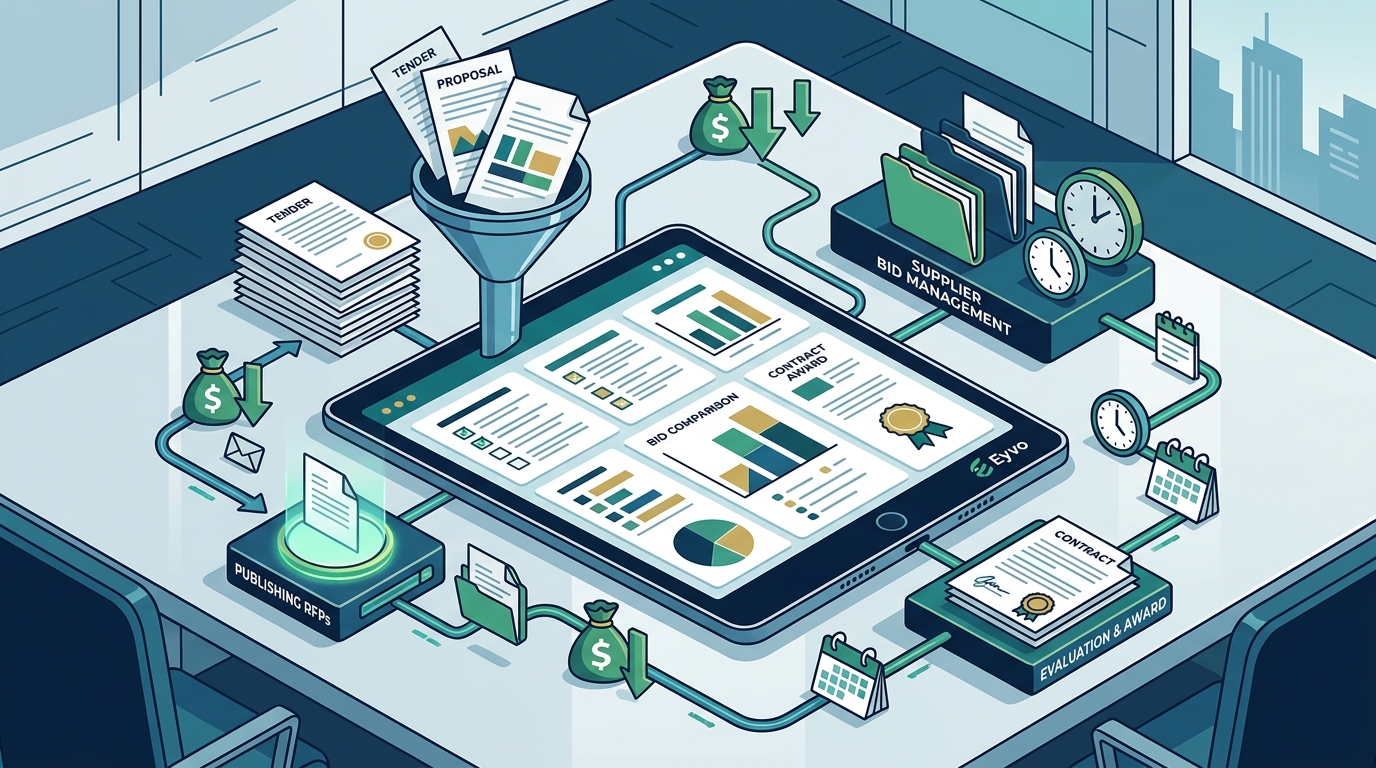
Implementing an electronic tendering system can transform how mid-sized organizations source suppliers, manage bids, and award contracts. An electronic tendering system is a digital platform that automates the entire tendering lifecycle, from publishing requests for proposals to evaluating and awarding contracts online. Yet without the right approach, even the best technology falls flat. This guide walks you through proven best practices for rolling out e-tendering successfully, so your procurement team saves time, reduces costs, and gains full visibility into every bid.
What Is Electronic Tendering?
E-tendering is the process of using online procurement platforms to solicit bid tenders, exchange documents, and evaluate suppliers digitally. It replaces paper-based workflows with a centralized, secure portal where buyers publish requirements and suppliers submit proposals electronically.
According to Tipalti, an e-tendering system is paperless, saves procurement time, and includes an online centralized document repository. For mid-sized organizations, this means fewer lost documents, faster cycle times, and a clear audit trail for every action taken during the bidding process.
Why Mid-Sized Organizations Need E-Tendering
Mid-sized organizations often operate with lean procurement teams that juggle dozens of supplier relationships. Manual tendering processes can take three months or longer, which is costly for both buyers and suppliers. E-tendering cuts that timeline dramatically.
Research from Tacto shows that automated evaluation criteria and real-time comparisons can reduce procurement time from six weeks to ten days, with cost savings of up to 18%. The table below highlights key differences between traditional and electronic tendering.
| Factor | Traditional Tendering | Electronic Tendering |
|---|---|---|
| Average Cycle Time | 6-12 weeks | 1-3 weeks |
| Document Storage | Physical filing / email | Centralized digital repository |
| Supplier Reach | Local / limited | Global / unlimited |
| Audit Trail | Manual tracking | Automatic, time-stamped |
| Evaluation Consistency | Subjective | Standardized scoring |
| Cost Savings Potential | Minimal | 12-18% on average |
Assess Your Procurement Needs First
Before selecting any technology, map your current procurement pain points. Identify where bottlenecks occur, whether in bid preparation, supplier communication, or evaluation. A thorough needs assessment is the foundation of any successful implementation.
Audit Existing Workflows
Document every step from requisition to contract award. Note which tasks are manual, which involve redundant approvals, and where errors creep in. Eyvo's guide on challenges in procurement management outlines common pitfalls that mid-sized teams encounter.
Define Success Metrics Early
Set clear targets before you begin. A success metric is a quantifiable indicator that measures whether an implementation has achieved its goals. Common metrics include cycle time reduction, supplier participation rates, and cost savings per tender event.
Choose the Right Platform
Not every e-tendering solution fits a mid-sized organization. Enterprise platforms like SAP Ariba are built for large-scale global procurement and often carry complexity that smaller teams do not need. Look instead for platforms that offer modular design, easy ERP integration, and scalable pricing.
Key Features to Evaluate
Prioritize solutions with built-in RFx, RFQ, and RFP capabilities that let you create, distribute, and score tenders from a single dashboard. Integration with your existing finance and ERP systems is also critical. Eyvo's integration module connects procurement data to accounting platforms without manual data entry.
Security and Compliance
Modern e-tendering platforms use end-to-end encryption, multi-level authentication, and secure cloud infrastructures to protect sensitive bid data. Ensure your chosen solution supports compliance with regulations relevant to your region, whether that is GDPR in the UK/EU or data privacy standards in the US.
Plan a Phased Rollout
Trying to digitize every tendering process at once is a recipe for failure. A phased rollout is an implementation strategy that introduces new technology in stages to minimize disruption and allow for iterative improvement.
Phase 1: Pilot with One Category
Start with a single procurement category, such as office supplies or IT services. Use this pilot to test workflows, gather user feedback, and refine evaluation templates. Eyvo's implementation services can help teams configure the system for a controlled initial deployment.
Phase 2: Expand and Integrate
Once the pilot proves successful, extend the system to additional categories. Connect the e-tendering module to your contract management and vendor compliance tools so that awarded contracts flow seamlessly into ongoing supplier management.
Train Your Teams and Suppliers
Technology adoption fails without people adoption. Insufficient digital skills among employees or suppliers can impair the effectiveness of electronic tendering, as noted by procurement researchers at Tacto. Training should cover both internal users and external bidders.
Offer short, role-specific training sessions rather than marathon workshops. Procurement officers need deep knowledge of evaluation tools, while occasional requesters only need to know how to submit a requirement. Provide suppliers with a simple onboarding guide to the vendor portal so they can submit bids without friction.
Measure Success with KPIs
After launch, track performance rigorously. Key performance indicators should cover process efficiency, cost impact, and user satisfaction. Review them quarterly and adjust workflows based on data.
Recommended KPIs include:
- Cycle time: Days from tender publication to contract award
- Supplier response rate: Percentage of invited suppliers who submit bids
- Cost savings: Difference between estimated and awarded contract value
- Compliance rate: Percentage of tenders following the approved process
- User adoption: Number of tenders processed through the system vs. off-system
According to Tacto, the investment in e-tendering typically pays for itself within 12 to 18 months through process optimization and procurement cost savings.
Key Takeaways
- E-tendering replaces slow, paper-based procurement with a centralized digital platform that cuts cycle times by up to 50%.
- Mid-sized organizations benefit most from modular, scalable platforms rather than complex enterprise suites.
- Always start with a needs assessment and define success metrics before choosing technology.
- A phased rollout reduces risk and lets your team learn incrementally.
- Training for both internal users and suppliers is essential for adoption.
- Track KPIs like cycle time, supplier response rate, and cost savings to prove ROI.
- Integration with existing ERP and contract management systems maximizes the value of your investment.
Frequently Asked Questions
What is an electronic tendering system?
An electronic tendering system is a web-based platform that digitizes the entire tendering process, from publishing bid requirements to evaluating supplier proposals and awarding contracts. It replaces manual, paper-based workflows with automated, secure online processes.
How long does it take to implement e-tendering in a mid-sized organization?
Most mid-sized organizations can complete an initial pilot deployment in 4 to 8 weeks, with full rollout across all procurement categories taking 3 to 6 months depending on complexity and integration requirements.
What cost savings can we expect from e-tendering?
Organizations typically see 12% to 18% savings on procurement costs through increased competition, reduced administrative overhead, and faster cycle times. The initial investment usually pays for itself within 12 to 18 months.
Do suppliers need special software to participate in e-tendering?
No. Most modern e-tendering platforms, including Eyvo, provide a web-based vendor portal that suppliers access through a standard browser. No special software installation is required.
How does e-tendering improve compliance?
Electronic tendering systems ensure compliance through integrated functions that automatically monitor tendering guidelines, maintain time-stamped audit trails, and enforce approval workflows. This reduces the risk of maverick spending and ensures regulatory adherence.
Can e-tendering integrate with our existing ERP system?
Yes. Leading eProcurement platforms offer integration modules that connect with popular ERP and accounting systems. Eyvo, for example, provides pre-built connectors and API-based integration to sync procurement data with finance platforms in real time.
What are the biggest risks of implementing e-tendering?
The most common risks include low user adoption, inadequate supplier onboarding, and poor integration with existing systems. These risks are mitigated through phased rollouts, comprehensive training, and selecting a platform with strong integration capabilities.
Is e-tendering suitable for public sector procurement?
Absolutely. E-tendering is widely used in public sector procurement to ensure transparency, fairness, and regulatory compliance. Many government agencies require electronic submission of bids to meet accountability standards.
Get Started with Electronic Tendering
Ready to modernize your tendering process? Eyvo's AI-powered eProcurement platform gives mid-sized organizations a modular, scalable solution with built-in RFx tools, vendor portals, and seamless ERP integration. Request a free demo today and see how quickly your procurement team can move from paper-based chaos to digital efficiency.