

How to Transition From Paper-Based Bidding to a Secure Online RFx Portal
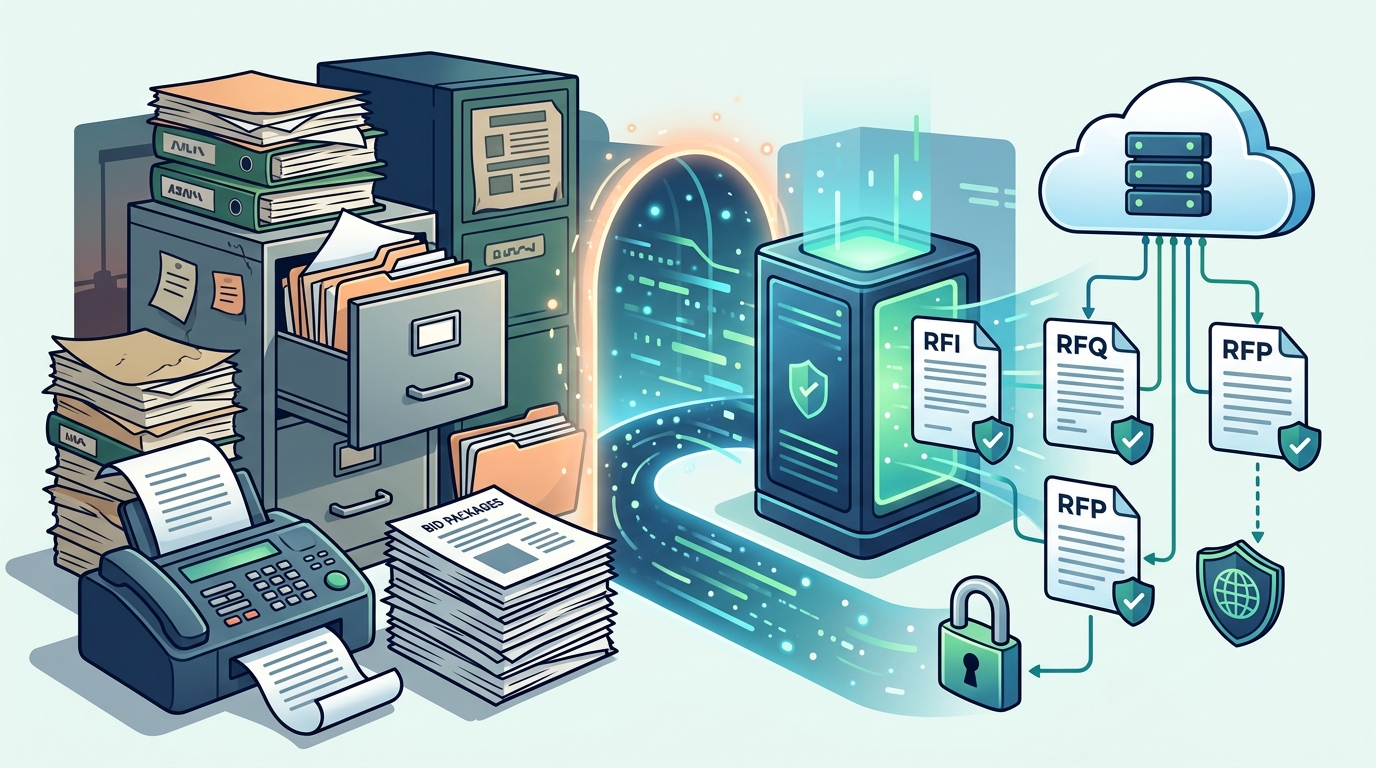
If your procurement team still relies on printed bid packages, faxed responses, and filing cabinets full of supplier quotes, you are not alone. According to PwC's Digital Procurement Survey, the average process digitization rate across enterprises was just 36 percent in 2024, though companies now target nearly 64 percent by 2027. The gap is closing fast because manual bidding introduces delays, compliance risks, and limited supplier reach. This guide walks you through every step of moving from paper-based bidding to a secure, cloud-hosted RFx portal so you can run RFIs, RFQs, and RFPs from a single digital platform.
What Is an RFx Portal?
An RFx portal is a secure online platform where organizations publish, manage, and evaluate Requests for Information (RFI), Requests for Quotation (RFQ), and Requests for Proposal (RFP) in one centralized system. Sometimes called eTendering, the process lets you gather criteria for the work you need done, publish it online, and invite suppliers to bid digitally. Eyvo's RFx module supports open (public) and closed bidding, sealed bids, and even a transparent Q&A forum visible to all participating suppliers.
Why Paper-Based Bidding Holds You Back
Manual procurement processes lead to inefficiencies, lack of visibility, increased risks, and missed savings. Paper bid packages get lost in transit, responses arrive inconsistently, and comparing quotes requires hours of manual data entry.
Hidden Costs of Manual Bidding
Research from The Hackett Group shows that procurement workloads are rising 10 percent while budgets grow only 1 percent, creating a 9 percent efficiency gap that only technology can close. Teams that digitized core tasks in 2024 saw a 40 percent drop in manual workloads, momentum that continued into 2025.
Compliance and Audit Risks
Paper trails are difficult to audit, easy to tamper with, and nearly impossible to search. A digital RFx portal creates a timestamped, immutable record of every bid submission, evaluation score, and supplier communication.
Step 1: Conduct a Procurement Readiness Audit
Before selecting software, map your current bidding process from end to end. Identify every touchpoint where paper is created, exchanged, or stored. Industry frameworks from Gartner and McKinsey recommend engaging cross-functional teams from finance, operations, and IT to document pain points and define success metrics like reduced cycle times.
Questions to Ask During the Audit
- How many RFx events do we run per quarter?
- What is the average turnaround time from bid publication to award?
- How many suppliers typically respond, and how many do we miss due to limited outreach?
Eyvo's professional services team can help you benchmark these metrics against industry averages before implementation.
Step 2: Choose the Right eTendering Platform
eTendering is the electronic process that allows organizations to publish bid criteria and receive supplier responses through a secure web portal. Look for a platform that supports multiple bid types (RFI, RFQ, RFP, reverse auction), integrates with your existing ERP or accounting system, and offers role-based access controls.
Key Selection Criteria
- Cloud-native architecture for anywhere access
- Configurable approval workflows
- A public-facing supplier portal for open tenders
- Built-in Q&A forums to keep communication transparent
Eyvo's Vendor Portal lets approved suppliers download bid documents, submit proposals, and upload certificates without requiring separate logins for each event. The platform also provides third-party integrations with popular ERP and finance systems.
Step 3: Migrate Supplier Data and Templates
Centralizing supplier information is critical. Export existing vendor lists, past bid templates, and evaluation scorecards from spreadsheets or legacy systems. Clean and standardize the data so the new platform can categorize suppliers by commodity, location, and certification.
Eyvo's Vendor Compliance and Risk Management module lets you attach compliance documents, insurance certificates, and tax records directly to each supplier profile, eliminating scattered paper files.
Step 4: Configure Workflows and Security
Digital procurement is the fundamental shift in how procurement operates through technology-enabled processes and governance. Your new portal should enforce who can create, approve, and publish an RFx event. Sealed-bid functionality ensures evaluators cannot view submissions until the deadline passes.
Security Best Practices
- Enable multi-factor authentication (MFA) or FIDO-based passwordless login. Eyvo details its approach on the FIDO authentication page.
- Assign role-based permissions so only authorized staff can view pricing data.
- Use TLS 1.2+ encryption for all data in transit.
According to an OECD policy paper (2025), integrating procurement processes end-to-end while adopting emerging technologies and using data to inform decisions are the three key areas driving the digital procurement shift.
Step 5: Train Your Team and Launch
User adoption determines success. Involve end users in the system design, choose intuitive solutions, and provide hands-on training. A phased rollout works best: start with one category or department, measure results, then expand.
Eyvo offers dedicated procurement training sessions and ongoing technical support to ensure teams are comfortable before you retire paper processes entirely.
Paper vs. Digital Bidding: Side-by-Side Comparison
| Criteria | Paper-Based Bidding | Secure Online RFx Portal |
|---|---|---|
| Bid Distribution Speed | Days to weeks (print, post, courier) | Instant (email notification + portal link) |
| Supplier Reach | Limited to known contacts | Open portal attracts new bidders globally |
| Evaluation Consistency | Manual scoring on spreadsheets | Weighted scoring with automated ranking |
| Audit Trail | Physical files, hard to search | Timestamped digital log, fully searchable |
| Security | Envelopes and locked cabinets | Encryption, MFA, sealed-bid controls |
| Average Cycle Time | 4 to 8 weeks | 1 to 3 weeks |
| Environmental Impact | High paper and courier usage | Near-zero paper waste |
Key Takeaways
- Paper-based bidding creates hidden costs through delays, lost documents, and limited supplier pools.
- A procurement readiness audit should always precede platform selection.
- Look for eTendering features like sealed bidding, public Q&A forums, and role-based permissions.
- Migrating and cleansing supplier data is essential; poor data quality undermines every digital tool.
- Security must be built in from day one with encryption, MFA, and access controls.
- Phased rollouts with proper training deliver higher user adoption and faster ROI.
- Organizations that digitized procurement tasks saw a 40 percent reduction in manual workloads.
Frequently Asked Questions
What does RFx mean in procurement?
RFx is an umbrella term covering RFI (Request for Information), RFQ (Request for Quotation), and RFP (Request for Proposal). It refers to any formal solicitation sent to suppliers during a competitive bidding process.
How long does it take to move from paper bidding to an online portal?
Most organizations can go live with a basic RFx portal in 4 to 8 weeks, depending on data migration complexity and the number of approval workflows required. Eyvo's implementation services are designed for rapid deployment.
Is an online RFx portal secure enough for sealed bids?
Yes. Modern eTendering platforms use encryption, sealed-bid functionality, and role-based access controls to ensure no evaluator can view submissions before the deadline. Eyvo supports both open and closed RFP formats.
Can small organizations afford an eTendering system?
Cloud-based platforms like Eyvo offer modular pricing so you only pay for the features you need. Visit the pricing page for details on scalable plans.
How do suppliers participate in an online RFx portal?
Suppliers register on the portal, get approved by the buyer, then download bid documents and submit proposals digitally. Eyvo's portal also includes a Q&A forum so all bidders see the same answers, ensuring fairness and transparency.
What if our suppliers are not tech-savvy?
Leading portals are designed for consumer-grade simplicity. Suppliers only need a web browser and an email address to register and submit bids. No special software installation is required.
Will a digital portal integrate with our existing finance system?
Most modern eProcurement platforms provide APIs or pre-built connectors to ERP and accounting systems. Eyvo's integration module supports connections to popular platforms including SAP, QuickBooks, and Xero.
How does going digital reduce our environmental footprint?
Eliminating printed bid packages, courier deliveries, and physical storage significantly cuts paper consumption and carbon emissions. Eyvo outlines its commitment to sustainability on its green policy page.
Ready to Replace Paper Bidding With a Secure RFx Portal?
The shift from manual bidding to a digital RFx portal is not just a technology upgrade; it is a strategic move that improves speed, transparency, and supplier competition. Request a free demo from Eyvo to see how the RFx module, vendor portal, and AI-powered procurement tools work together to modernize your sourcing process.