

Connecting your procurement management software to an existing ERP system is one of the most impactful upgrades a purchasing team can make. When done right, integration eliminates duplicate data entry, improves spend visibility, and accelerates approval cycles. Yet many organizations struggle with disconnected workflows that create blind spots and slow down operations. This guide walks you through the practical steps, common pitfalls, and proven best practices for a seamless procurement-ERP integration in 2026.
Why Procurement-ERP Integration Matters
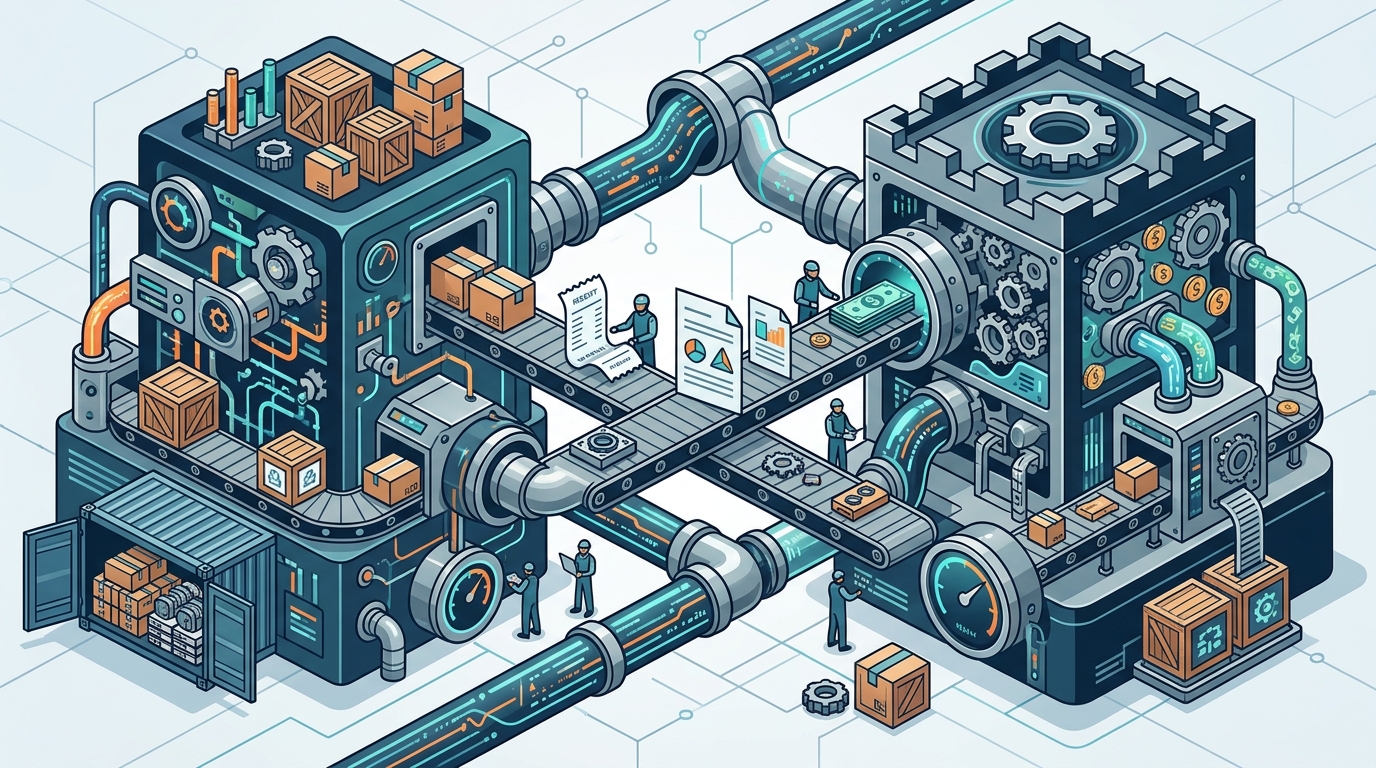
Most ERP platforms handle finance-focused tasks like invoices, payments, and accounting, but they offer limited support for strategic sourcing and supplier collaboration. Procurement teams that rely on separate, disconnected tools end up transferring information manually, which leads to errors, approval delays, and poor spend visibility.
According to Deloitte research cited by Spendflo, nearly 70% of procurement leaders struggle to manage vendors efficiently due to disconnected systems and manual approvals. Integration bridges the gap between purchasing operations and financial oversight so every stakeholder works from a single source of truth.
Key Terms You Should Know
ERP (Enterprise Resource Planning)
An ERP system is a software solution that helps organizations manage and integrate their core business processes through a centralized platform. It typically covers finance, HR, and operations.
eProcurement
eProcurement is the digital management of the entire purchasing lifecycle, from requisitions and approvals to purchase orders and supplier payments. Platforms like Eyvo's eProcurement suite add sourcing, inventory, and vendor management on top of basic buying functions.
API (Application Programming Interface)
An API is a set of protocols that allows two software systems to exchange data automatically without manual intervention. APIs are the backbone of modern procurement-ERP integrations.
Step-by-Step Integration Process
1. Audit Your Current Systems
Start by evaluating your ERP's existing procurement capabilities. Identify gaps in workflows, supplier management, and reporting. Gather input from procurement, finance, and IT teams to understand operational needs before selecting a solution.
2. Define Integration Goals and Data Map
Decide exactly which data points need to flow between systems: purchase orders, invoices, goods receipts, supplier records, and budget codes. A clear data map prevents scope creep and ensures clean synchronization. Eyvo's dedicated integration module simplifies this mapping for popular ERP platforms.
3. Choose Your Integration Method
Select from APIs, middleware connectors, or file-based transfers depending on your ERP architecture. Cloud-based procurement tools generally offer faster, cleaner integrations than on-premise alternatives. See the comparison table below for guidance.
4. Pilot, Test, and Go Live
Run a pilot integration with a limited dataset before full deployment. Validate data accuracy across purchase orders, invoices, and supplier records. Plan for parallel system operations during the transition to avoid disruptions.
Integration Methods Compared
| Method | Best For | Speed | Cost | Flexibility |
|---|---|---|---|---|
| REST/SOAP APIs | Cloud-to-cloud connections | Real-time | Low to Medium | High |
| Middleware (e.g., MuleSoft, Boomi) | Complex, multi-system landscapes | Near real-time | Medium to High | Very High |
| Flat File / CSV Transfer | Legacy ERP with limited API support | Batch (scheduled) | Low | Low |
| Native Connectors | Pre-built ERP partnerships | Real-time | Included or Low | Medium |
For most mid-market organizations, a combination of native connectors and API-based integration offers the best balance of speed and flexibility. Eyvo supports third-party integrations across leading ERP and accounting platforms.
Common Challenges and How to Solve Them
Data Inconsistencies
Mismatched fields between procurement and ERP systems cause reconciliation headaches. Solve this by standardizing naming conventions, unit codes, and supplier IDs before integration begins.
Legacy System Limitations
Older ERP platforms may lack modern API endpoints. In these cases, middleware or scheduled file imports bridge the gap while you plan a longer-term upgrade. Organizations should audit their existing technology infrastructure before committing to a specific approach.
Stakeholder Resistance
Integration affects finance, procurement, and IT alike. Involve all stakeholders early, align on goals, and demonstrate quick wins. Eyvo's procurement integration resources offer practical frameworks for building cross-team buy-in.
Measurable Benefits of a Connected System
Research indicates that companies integrating procurement and financial systems can lower procurement costs by 10 to 15 percent through better visibility and control. Organizations using advanced procurement platforms also report up to 40% faster cycle times compared to manual processes, according to Tradogram's 2026 analysis.
Beyond cost savings, a connected system delivers centralized spend dashboards, automated three-way invoice matching, and real-time inventory management. These capabilities help teams shift from reactive problem-solving to strategic procurement planning.
The global procurement software market is projected to grow from $8.2 billion in 2024 to $17.5 billion by 2033, according to IMARC Group data. Integration-ready platforms are leading that growth.
Key Takeaways
- Disconnected procurement and ERP systems create manual work, errors, and poor spend visibility.
- Start every integration project with a thorough audit of your current ERP capabilities and procurement gaps.
- Define clear data maps covering purchase orders, invoices, supplier records, and budget codes before writing a single line of integration code.
- APIs and native connectors offer the fastest path to real-time data synchronization for cloud-based systems.
- Involve finance, IT, and procurement stakeholders from day one to prevent resistance and misaligned goals.
- Pilot integrations with limited data before full deployment to catch issues early.
- Integrated organizations typically see 10 to 15 percent lower procurement costs and significantly faster cycle times.
Frequently Asked Questions
What is procurement-ERP integration?
Procurement-ERP integration is the process of connecting a dedicated procurement platform with an enterprise resource planning system so that purchasing data, supplier records, and financial information flow automatically between both tools.
How long does a typical integration take?
Timelines vary widely. Cloud-based connectors can go live in weeks, while heavily customized on-premise integrations may take six months to over a year depending on data migration complexity.
Do I need middleware for integration?
Not always. If your ERP and procurement tool both support modern APIs, a direct connection is usually sufficient. Middleware becomes valuable when you have multiple legacy systems or complex data transformation requirements.
Can I integrate procurement software with any ERP?
Most modern procurement platforms, including Eyvo, support integrations with major ERP systems like SAP, Oracle, Microsoft Dynamics, and NetSuite. Legacy systems may require flat-file imports or middleware as a bridge.
What data should flow between procurement and ERP?
At minimum, you should synchronize purchase orders, goods receipts, invoices, supplier master data, cost centers, and budget allocations. This ensures financial accuracy and eliminates double entry.
How does integration improve compliance?
A connected system enforces approval hierarchies, prevents unauthorized purchases, and maintains complete audit trails from requisition to payment. This reduces maverick spend and strengthens regulatory compliance.
What role does AI play in procurement-ERP integration?
AI-powered procurement tools can automate invoice matching, flag anomalies, forecast demand, and recommend optimal suppliers. When connected to your ERP, these insights feed directly into financial planning. Learn more about Eyvo's AI-powered procurement capabilities.
How do I measure integration success?
Track metrics like purchase order cycle time, invoice processing speed, data error rates, and maverick spend percentage before and after integration to quantify the impact.
Ready to Connect Your Systems?
Eyvo's integration module is built to connect seamlessly with your existing ERP, accounting, and financial systems. Whether you run SAP, Oracle, or a niche platform, our team will map your data, configure the connection, and get you live with minimal disruption. Request a free demo to see how Eyvo fits into your technology stack.