

Building a Compliance-First Vendor Selection Framework: A Practical Guide for Procurement Leaders
Vendor management is no longer a back-office afterthought. Regulators across industries—from the SEC to NYDFS—are treating third-party oversight as critical infrastructure, and the consequences of getting it wrong are growing. This guide walks you through a compliance-first approach to selecting vendors, organized around five foundational pillars that procurement, legal, and IT teams can adopt together.
Why Compliance-First Vendor Selection Matters Now
The regulatory environment around third-party risk has intensified sharply. Vendor management is a top regulatory focus in 2025, with examiners closely reviewing how organizations assess, monitor, and manage third-party relationships. At the same time, cybersecurity incidents originating from vendor relationships continue to climb—more than 35 percent of data breaches are now linked to third-party vendors, according to SecurityScorecard research. Meanwhile, nearly half of organizations experienced a third-party breach in the past year alone.
For procurement teams, this means compliance cannot be an afterthought bolted on after a vendor has been shortlisted. It must be woven into every stage—from initial market scanning through onboarding and beyond.
Pillar 1 — Cross-Functional Governance from Day Zero
The most common structural failure in vendor selection is treating compliance as a single team's responsibility. Effective programs require procurement, legal, IT/InfoSec, and business stakeholders working in parallel from the start.
Why Parallel Workstreams Beat Sequential Sign-Offs
Many organizations still run vendor selection as a linear process where IT joins only after contracts are nearly final. This creates a dynamic where security requirements become requests rather than obligations. When IT joins at intake, those requirements are negotiated into the agreement before either side has committed.
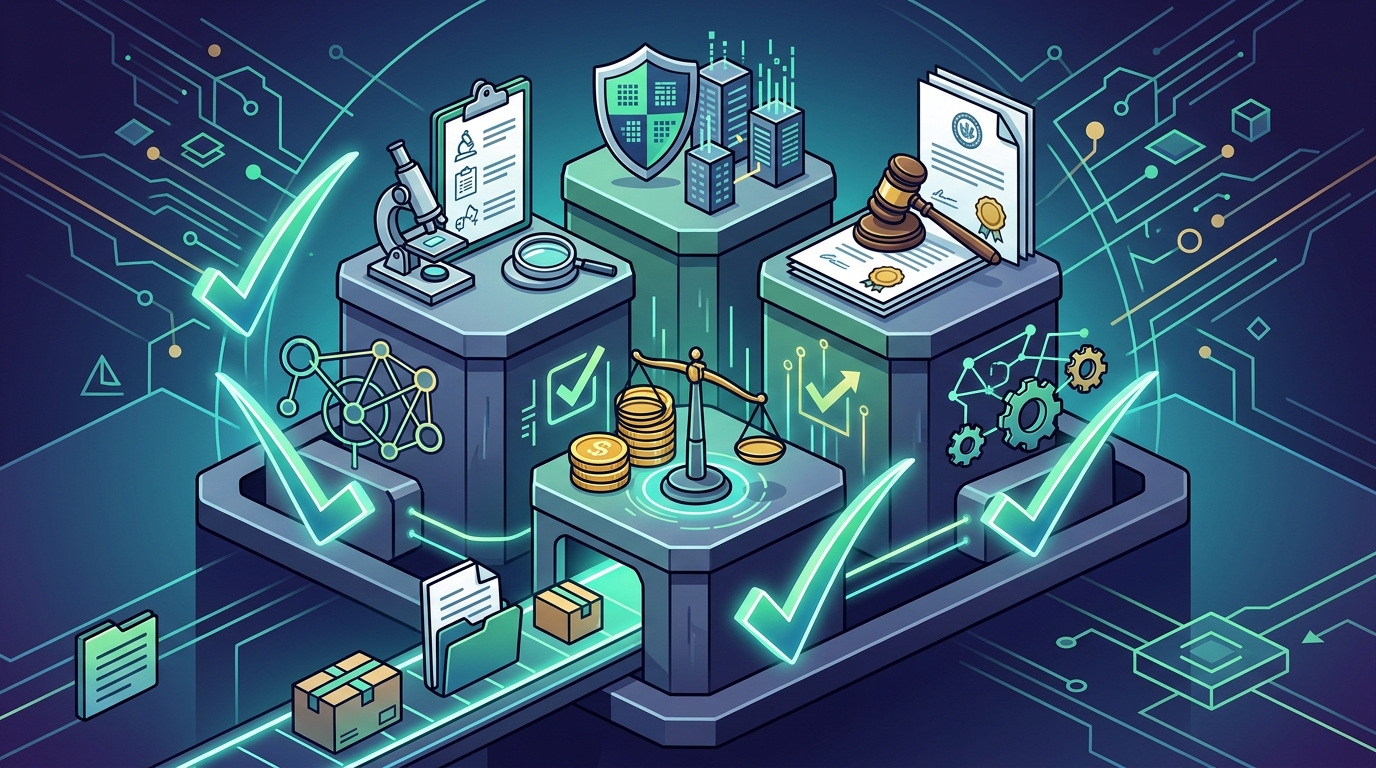
What Good Governance Looks Like in Practice
- Executive sponsorship: Senior management and board-level leaders should be involved in vendor selection planning, aligning it with the organization's overall strategy.
- Compliance checkpoints embedded in planning cycles: Product roadmaps, vendor selection, budget reviews, and strategic initiatives all become checkpoints where emerging regulatory themes are considered upfront.
- Clear RACI mapping: Document who is responsible, accountable, consulted, and informed at each selection stage—particularly for data handling, regulatory filings, and incident response.
Pillar 2 — Risk-Tiered Due Diligence
Not every vendor warrants the same depth of scrutiny. The key is matching due diligence intensity to the risk profile of each relationship.
Segmenting Vendors by Risk Level
Not all vendors carry the same level of risk, so due diligence efforts should match the complexity and risk level of each third-party relationship. Higher-risk vendors—especially those handling sensitive data or performing critical operations—require a more detailed evaluation that may include on-site audits, penetration test reviews, and SOC 2 report analysis.
Practical Due Diligence Steps by Tier
| Tier | Vendor Profile | Due Diligence Depth |
|---|---|---|
| Critical (Tier 1) | Handles PII, processes payments, or integrates with core systems | Full security assessment, on-site audit, SOC 2 / ISO 27001 review, sanctions screening, financial stability check, 3–7 business day cycle |
| Significant (Tier 2) | Accesses internal networks or manages operational processes | Standardized risk questionnaire, certificate validation, reference checks, 1–3 business day cycle |
| Low (Tier 3) | Supplies commodity goods, no system access | Sanctions screening, basic compliance attestation, risk-based sampling |
Don't Accept Stale Evidence
A common failure mode is accepting a SOC 2 certificate without checking the audit date or scope. A report completed 18 months ago against a narrower product version is not evidence of current security posture. Always validate recency and relevance.
Sanctions Screening Is Continuous, Not One-Time
Sanctions lists are dynamic databases that are regularly updated. Ideally, your organization should be able to run checks against debarred and sanctions lists in real time to ensure that none of your current, active vendors appear on them. Relying solely on onboarding-time checks leaves significant exposure.
Pillar 3 — Contractual Safeguards That Actually Protect You
The contract is the single most important compliance artifact in a vendor relationship. It defines what the vendor must do, how performance is measured, and what happens when things go wrong.
Must-Have Contractual Provisions
- Explicit compliance standards: If you require alignment to ISO 27001 or NIST, write it plainly into the contract. Vague references to "industry best practices" are unenforceable.
- Incident notification timelines: Specify that the vendor must notify you within a defined window (e.g., 72 hours) if a breach occurs. Some regulations, like the SEC's amended Regulation S-P, mandate customer notification within 30 days of discovering an incident, regardless of whether the breach originated internally or from a vendor.
- Right-to-audit clauses: Preserve your ability to inspect vendor operations, either directly or through independent third parties.
- Defined penalties and exit provisions: Set enforceable consequences, including a termination protocol, for applicable compliance failures. This motivates adherence without relying solely on goodwill.
- Data handling and subcontractor requirements: Ensure the vendor's downstream providers are also held to your standards.
Involve the Right Reviewers
Senior leadership, legal teams, and compliance officers should all be involved in contract reviews to align with regulatory requirements and risk management expectations. Do not delegate final sign-off to procurement alone.
Pillar 4 — Technology as a Compliance Multiplier
Manual processes—email chains, spreadsheets, and siloed document folders—are the enemy of compliance at scale. Modern vendor management systems provide the structure, automation, and shared visibility needed to keep pace with regulatory demands.
What Automation Solves
- Expiration tracking: A vendor management system automates compliance tracking, flagging expired certifications, regulatory changes, or deviations from contractual obligations.
- Centralized evidence repositories: By consolidating contracts, certifications, audits, and performance records in one location, businesses can easily track and verify compliance.
- Guided onboarding workflows: Collect and verify supplier data through structured workflows, reducing errors and ensuring nothing is skipped.
- Audit trails: Digital procurement processes create a clear, centralized audit trail that reduces the chances of noncompliance caused by human error.
Choosing the Right Platform
Enterprise options range from broad suites like SAP Ariba and Coupa (strong on spend management and risk controls) to modular platforms focused specifically on supplier information management and risk monitoring. The best choice depends on your organization's size, existing ERP landscape, and the complexity of your vendor ecosystem. Key evaluation criteria include integration capabilities with existing systems, scalability for growth, ease of use, and long-term ROI.
Pillar 5 — Continuous Monitoring and Recertification
Vendor oversight doesn't stop after signing the contract. The risk profile established during onboarding becomes the baseline that every subsequent review is measured against.
Moving Beyond Annual Audits
In 2025, real-time monitoring is essential for identifying risks as they emerge. Organizations should shift from annual audits to dynamic assessments using automated data validation, surprise site inspections, and subcontractor compliance sampling. Organizations using structured programs typically achieve 94 percent audit readiness, compared to 67 percent in less structured programs.
What to Monitor Continuously
- Changes in financial health, security practices, and regulatory compliance status
- Complaint volume and resolution metrics—benchmarking across vendors provides natural performance comparisons
- Subcontractor changes or new fourth-party dependencies
- Updates to sanctions lists and debarment databases
Recertification Cadence
Use recertification processes to ensure that active vendors continue to meet defined standards. Critical vendors should be recertified at least annually with interim spot checks; lower-tier vendors can follow an 18- to 24-month cycle with risk-based sampling.
Emerging Concern: AI Governance in Vendor Evaluation
As vendors increasingly embed AI into their products and services, procurement teams face a new dimension of compliance risk. A 2025 EY survey found that nearly all large companies deploying AI reported some risk-related financial loss—from compliance failures to flawed outputs and bias.
When evaluating vendors that use AI, organizations should align assessments to recognized frameworks like ISO 27001 or SOC 2, incorporate AI governance expectations, and maintain transparency to build trust rather than friction. Before adopting AI-powered vendor tools, follow a structured evaluation process that assesses use cases, regulatory implications, data quality, vendor dependencies, output risks, and human oversight requirements.
Key Takeaways
- Governance is structural, not aspirational. Parallel workstreams for procurement, legal, and IT—starting at vendor intake—prevent the most expensive compliance gaps.
- Risk-tier your due diligence. Spend deep assessment time on critical vendors; use risk-based sampling for commodity suppliers.
- Make contracts enforceable. Name specific standards, set incident notification deadlines, and include exit provisions.
- Automate what machines do better. Expiration tracking, sanctions screening, and audit trails should never depend on manual processes.
- Monitor continuously, not annually. Real-time compliance tracking and regular recertification are now table stakes.
- Account for AI risk. Vendor-embedded AI introduces new compliance dimensions that traditional checklists miss.
Frequently Asked Questions
- What is the biggest compliance risk during vendor selection?
- The most significant risk is treating compliance as a late-stage checkbox rather than a parallel workstream. More than 80 percent of organizations detect supplier risks only after onboarding begins, which means most teams are already reacting rather than preventing problems. Running compliance checks before the contract is negotiated keeps your leverage intact.
- How do I decide how much due diligence a vendor needs?
- Segment vendors by risk level. Higher-risk vendors—particularly those handling sensitive data or performing critical operations—require detailed evaluations including security audits and SOC 2 reviews. Lower-tier vendors supplying commodity goods may only need sanctions screening and basic attestation.
- What contractual clauses are essential for vendor compliance?
- At minimum, include explicit compliance standard references (e.g., ISO 27001, NIST), incident notification timelines, right-to-audit clauses, defined penalties for non-compliance, and subcontractor compliance flow-down requirements.
- How often should we reassess vendor compliance?
- Critical vendors should be reassessed at least annually with interim spot checks. The trend is toward continuous, real-time monitoring using automated tools rather than periodic point-in-time audits. Organizations that adopt dynamic assessment methods achieve significantly higher audit readiness.
- Do we need to evaluate a vendor's use of AI separately?
- Yes. AI introduces risks around data quality, bias, regulatory alignment, and output reliability that traditional security assessments may not cover. Follow a structured evaluation that assesses use cases, regulatory implications, vendor dependencies, and human oversight mechanisms.
- What role should technology play in vendor compliance?
- Technology should automate repetitive compliance tasks—sanctions screening, certification expiry alerts, document collection, and audit trail creation. This frees expert staff to focus on interpretation, risk judgment, and relationship management rather than administration.